News

Category

CHRM College and Mutie Advocates Forge Strategic Partnership to Advance Data Protection Excellence in Kenya

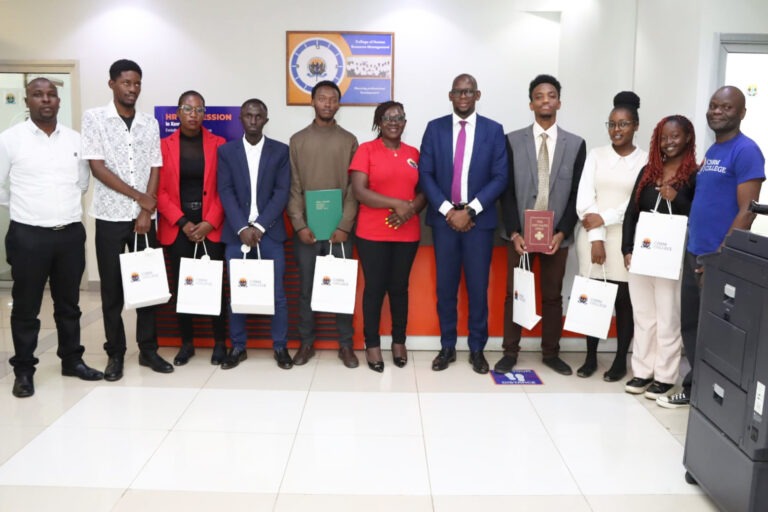
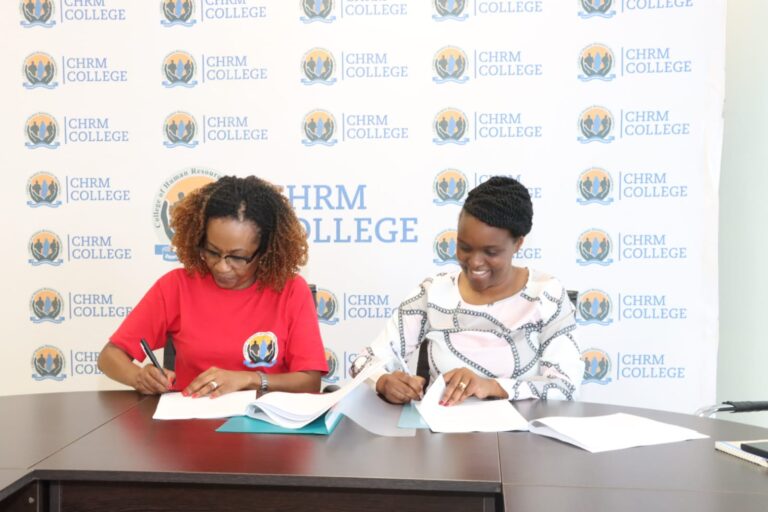
In a significant move to strengthen corporate governance and regulatory compliance, CHRM College officially signed a Memorandum of Understanding (MOU) with Mutie Advocates on March 25, 2026 at the CHRM College campus.

This landmark collaboration establishes a structured framework to jointly develop, market, and deliver specialized data protection training, capacity-building initiatives, and comprehensive compliance support services.

As organizations navigate the complexities of the Data Protection Act, 2019, the need for practical, industry-aligned expertise has never been greater. This partnership merges CHRM College’s storied reputation in Human Resource development with the legal prowess of Mutie Advocates to offer a one-stop shop for organizational integrity.

The collaboration focuses on four key pillars:

  1. Specialized Training: Designing accredited and non-accredited programs specifically tailored for the HR function and the broader corporate environment.
  2. Practical Application: Promoting deep awareness of subsidiary regulations to ensure the Data Protection Act is lived, not just filed.
  3. Compliance Audits: Executing joint advisory mandates and independent consulting assignments to help institutions identify and mitigate data risks.
  4. Enhanced Governance: Strengthening accountability standards within institutions to meet international best practices.

The timing of this MOU is particularly strategic as CHRM College prepares for its May and September academic intake. New and existing students, as well as corporate partners, will now have access to cutting-edge curricula that address the most pressing legal challenges in the modern workplace.

“This partnership is about more than just compliance; it is about empowering HR professionals to be the custodians of trust in their organizations,” noted the leadership during the signing ceremony.

Is your institution fully aligned with the Data Protection Act? Together, CHRM College and Mutie Advocates are ready to guide you through audits, training, and advisory services.

Why CHRM College Is a Smart Choice for Your Academic and Professional Growth in 2026

Why CHRM College Is a Smart Choice for Your Academic and Professional Growth in 2026

As Kenya’s education and employment landscape continues to evolve, students and working professionals are increasingly seeking institutions that provide education aligned with real-world demands. The decision to pursue higher education today goes beyond obtaining a certificate; it involves choosing a learning environment that nurtures practical skills, professional ethics, and long-term career growth.

CHRM College has positioned itself as an institution dedicated to producing competent, industry-ready professionals through relevant academic and professional training. With the January 2026 Intake ongoing, prospective learners are exploring institutions that offer flexibility, credibility, and practical value. CHRM College continues to stand out for its commitment to quality education and career-focused learning.

Industry-Relevant Programs Designed for the Modern Workplace

CHRM College emphasizes programs that are informed by current industry needs and workplace trends. Its academic and professional offerings are structured to ensure learners acquire practical knowledge that is applicable in today’s job market. The institution provides training across multiple disciplines including Human Resource Management, Business Management, Information and Communication Technology, Health Records and Information Technology, Security Management, Forensic Studies, Accounting, and a wide range of professional certifications.

This industry-driven approach ensures that students graduate with skills that are relevant, transferable, and aligned with employer expectations. By focusing on both theory and application, CHRM College equips learners with competencies that enhance employability and professional effectiveness.

Leadership in Human Resource and Professional Training

CHRM College is widely recognized for its strong foundation in Human Resource and people management training. Over the years, the institution has built a reputation as a center of excellence in HR education, offering respected programs such as the Certified Human Resource Professional (CHRP), Human Resource Certification Institute (HRCI) courses, CPSP-K, and various diplomas and certificates in Human Resource Management.

These programs are designed to support learners at different stages of their careers, whether they are starting out in the profession or seeking advancement into senior and executive roles. The structured progression pathways allow learners to build their qualifications systematically while gaining practical insights into the HR profession.

Flexible Learning Options That Fit Diverse Lifestyles

Recognizing that learners have varying commitments, CHRM College offers flexible learning modes that cater to both full-time students and working professionals. The institution provides on-campus learning, online and blended classes, as well as weekend and executive programs. This flexibility enables students to balance education with work, family, and other responsibilities.

The availability of multiple study options makes CHRM College accessible to a wide range of learners, including professionals seeking to upskill or transition into new career paths. This learner-centered approach supports continuous education without compromising productivity or personal obligations.

Experienced Faculty and Practical Learning Approach

Learning at CHRM College is facilitated by experienced faculty members who bring both academic expertise and industry exposure into the classroom. Trainers incorporate real-world examples, case studies, and interactive discussions that help students understand how theoretical concepts apply in practical workplace situations.

This approach enhances critical thinking, problem-solving, and decision-making skills. Students benefit from insights drawn from actual professional experiences, enabling them to gain a deeper understanding of industry dynamics and workplace expectations.

Accredited Programs and Professional Recognition

CHRM College works closely with recognized examining and professional bodies to ensure its programs meet established academic and professional standards. These affiliations enhance the credibility of CHRM qualifications and support graduates seeking recognition within professional bodies locally and internationally.

Professional linkages also provide learners with exposure to industry networks, continuous professional development opportunities, and forums that contribute to long-term career growth. This integration of academic learning and professional recognition strengthens the value of CHRM College programs.

Accessible Campuses Across Kenya

With campuses located in Nairobi CBD, Mombasa, Nakuru, and Kisumu, CHRM College offers accessible education to students across different regions of Kenya. Each campus is designed to provide a conducive learning environment supported by modern facilities and student support services.

This geographical presence allows learners to pursue quality education closer to where they live or work, reducing barriers related to distance while maintaining consistent academic standards across all campuses.

Focus on Employability and Career Readiness

CHRM College places strong emphasis on preparing students for the workplace. Programs are designed to develop not only technical competence but also communication skills, leadership abilities, ethical conduct, and professional confidence. These attributes are essential for success in today’s competitive job market.

Through a curriculum that integrates practical learning and professional values, graduates are equipped to contribute effectively to organizations, pursue career advancement, or explore entrepreneurial opportunities.

Commitment to Lifelong Learning and Professional Development

In an ever-changing professional environment, continuous learning is essential. CHRM College supports lifelong learning by offering short courses, executive training programs, and professional certifications that allow individuals to upgrade their skills and remain competitive in their fields.

This commitment ensures that CHRM College remains relevant not only to students entering the workforce but also to experienced professionals seeking to enhance their expertise and adapt to evolving industry requirements.

A Values-Driven Academic Community

Beyond academic excellence, CHRM College promotes values such as integrity, professionalism, and ethical leadership. These principles are embedded in the institution’s culture and learning environment, shaping graduates who are responsible, ethical, and socially conscious.

By fostering both professional competence and strong values, CHRM College contributes to the development of leaders who make a positive impact within organizations and society at large.

January 2026 Intake: A Thoughtful Step Toward the Future

The January 2026 Intake at CHRM College presents an opportunity for learners to begin or advance their educational journey within an institution that prioritizes relevance, flexibility, and quality. Prospective students are encouraged to carefully consider programs that align with their personal goals and long-term career aspirations.

Rather than focusing solely on enrolment, CHRM College emphasizes informed decision-making, guiding learners toward programs that support sustainable career growth and professional fulfilment.

Conclusion

CHRM College continues to play a vital role in developing skilled, ethical, and industry-ready professionals in Kenya. Through accredited programs, flexible learning options, experienced faculty, and strong professional linkages, the institution provides a solid foundation for academic and career success.

As the January 2026 Intake remains ongoing, CHRM College stands as a dependable choice for individuals seeking practical education that aligns with current workforce demands while preparing them for future opportunities.

Bridging Excellence: CHRM College and AIU Forge Strategic Partnership to Elevate HR Education

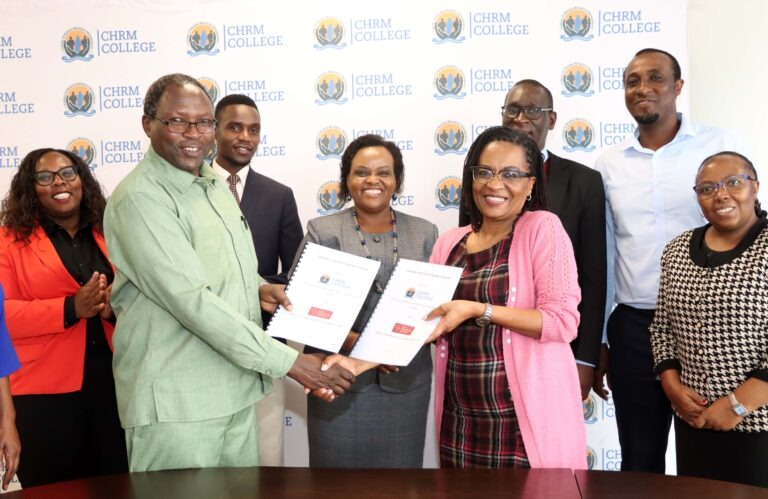
On October 27th, 2025, CHRM College and Africa International University (AIU) formalized a groundbreaking partnership through the signing of a Memorandum of Understanding (MoU). This partnership represents a shared vision to advance human resource education, leadership development, and national transformation in Kenya and beyond.

The ceremony brought together CHRP Margaret K. Kinyanjui, Principal, CHRM College together with her team, alongside senior representatives from AIU, led by Prof. John Koskey Chang’ach, the Deputy Vice-Chancellor for Academic Affairs and Research, who represented the Vice Chancellor. AIU’s delegation also included Dr. Lucy Kinyua, Dean of the School of Business and Economics; Dr. Florence Mungathia, Director of Institutional Development and Brand Management; Joseph Muriithi, Head of Marketing; Enos Changulo, Partnership Manager; and Hannah Gacheri, Administrative Officer for the School of Business and Economics.

This strategic alliance takes advantage of the strengths of both institutions, creating a link between professional certification and academic achievement. CHRM graduates will now benefit from structured credit transfer arrangements at AIU, facilitating continued academic progression. Meanwhile, AIU students focusing on Human Resource Management gain access to dual certification pathways, earning both their degree and a professional HR qualification from CHRM, a combination designed to enhance their professional stature and career readiness.

Beyond academics, the partnership emphasizes joint executive and professional development programs tailored to workplace needs, collaborative research in HR, leadership, and management, as well as shared consultancy and training services that meet the demands of both corporate and public sectors. This collaboration is positioned not only to expand educational opportunities but also to contribute significantly to organizational excellence and ethical leadership.

At CHRM, the future of education is firmly rooted in collaboration and innovation aligned with real-world needs. Partnering with a respected institution like AIU intensifies the commitment to preparing well-rounded professionals capable of applying human resource principles with integrity and impact. This partnership is part of a larger vision to enhance the quality of HR and leadership education across Africa, combining academic rigor with practical relevance.

The CHRM-AIU MoU is a bold step toward transforming HR education and leadership development, empowering learners to grow both intellectually and professionally while driving sustainable national development.

CHRM College Marks 28th Graduation with Splendor and Recognition

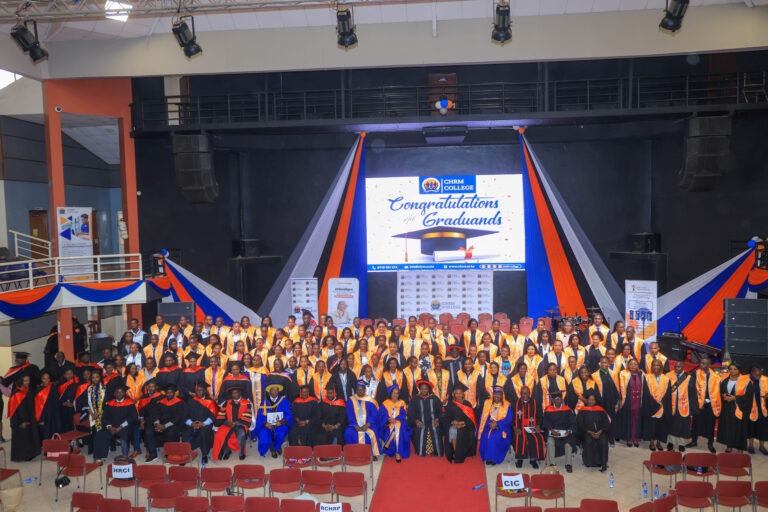
On Friday, 26th September 2025, CHRM College proudly hosted its 28th Graduation Ceremony at St. Andrews PCEA Church Hall, celebrating a milestone of academic excellence and professional achievement. A total of 863 graduands were conferred with certificates and diplomas, marking the culmination of years of dedication, resilience, and commitment to their careers in human resource management and related disciplines.

The ceremony was graced by distinguished guests and leaders from academia, industry, and public service. CHRM College Principal, CHRP Margaret K. Kinyanjui, warmly welcomed the graduates and guests, setting an inspiring tone for the day. In his remarks, Dr. Tom U. Kamaliki (Hon. Causa), MIHRM, Chairperson of the Education & Training Board Committee, emphasized the importance of continuous learning and adaptability in the evolving world of work.

College Board Chairman, CHRP Odhiambo Ooko, FIHRM, congratulated the graduates for their perseverance and highlighted the College’s ongoing commitment to developing competent and ethical professionals.

The highlight of the day was the keynote address by the Chief Guest, Dr. Amani Yuda Komora, PhD, MBS, CHRP(K), FIHRM, Chairperson of the National Police Service Commission (NPSC). Dr. Komora challenged the graduates to embrace leadership, integrity, and innovation in their professional journeys. He encouraged them to not only seek personal growth but also contribute meaningfully to the transformation of workplaces and society at large.

The ceremony also featured the presentation of awards to outstanding students, recognizing academic excellence and exemplary performance. These awards were presented by College Board Members and sponsors, with immense support from individuals and organizations including: Christopher Sakwa, Mr. George Wabwire, CHRM Alumni Association, ICEA LION Group, BrighterMonday Kenya, Dr. James Mwikya, AU Innovations, CHRP Odhiambo Ooko, Brenda Abwavo, Rev. Canon Stephine Obong’o, Marketing Society of Kenya, CHRP Margaret Nguu, Edna Kiptoon, Dr. Tom Kamaliki, Cambridge International College and Mr. James Maitho. Their generosity underscored the strong partnerships between the College, industry stakeholders, and the alumni community in nurturing excellence.

Guiding the day’s proceedings with elegance and wit was Christopher Sakwa Wangara (SPHRi, CHRP-K, CPM, MIHRM), who served as the Master of Ceremony.

The 28th Graduation Ceremony was not only a celebration of academic success but also a reaffirmation of CHRM College’s vision to shape the future of work by producing competent, ethical, and innovative professionals.

It’s Okay Not to be Okay at Work: HR & Legal Insights for Suicide Prevention Month

September is globally recognized as Suicide Prevention Month, with September 10th marking World Suicide Prevention Day. For organizations and HR professionals, this presents a timely and critical opportunity to foster open conversations around mental health, reduce stigma, and ensure employees have access to supportive resources. Promoting mental well-being in the workplace is not just a moral responsibility — it is essential for building resilient, compassionate, and productive teams.

Given that we spend a substantial portion of our lives at work, fostering open and meaningful conversations about mental health and suicide prevention in the workplace is not only important but essential.

According to the World Health Organization (WHO), suicide is the third leading cause of death among individuals aged 15 to 29 globally. Alarming statistics indicate that over 700,000 lives are lost to suicide each year worldwide.

In Kenya, stress, burnout, harmful addictions, depression, and financial pressure, if left unaddressed can significantly negatively impact employees’ well-being and may increase the risk of suicidal thoughts and behavior. So, what is the role of employers, HR departments, and the law in creating mentally healthy work environments?

The Legal Foundation

Article 43 (a) of the Constitution of Kenya 2010 states that every person has the right to the highest attainable standard of health, which includes the right to health care services.

Under the Occupational Safety and Health Act (OSHA), 2007, every employer in Kenya has a legal obligation to ensure the safety, health, and welfare of employees—including psychosocial health. Failure to address mental well-being could be interpreted as a breach of this duty.

Additionally, the Employment Act encourages employers to adopt humane treatment, non- discrimination, and fair working conditions—all of which intersect with mental health.

Under Section 3 (b) of the Mental Health (Amendment) Act, 2022 provides that every person has a right to the highest attainable standard of mental health services. The Section also provides that a person with mental illness has the right to appropriate, affordable, accessible physical and mental medical health care; counselling; rehabilitation; and aftercare support.

It is important to highlight that Kenya ratified the UN Convention on the Rights of Persons with Disabilities (CRPD) in 2008. The Convention sets out the government’s obligation to respect, protect and fulfill the rights of persons with disabilities in all aspects of their lives. Under the Convention, persons with mental health conditions are considered as persons with (mental)

disabilities and are accorded human rights protection. By virtue of article 2 (6) of the Constitution of Kenya, the CRPD forms part of the laws of Kenya.

Mental Health: A HR Responsibility?

HR professionals are uniquely positioned to bridge the gap between policy and compassion, placing the ‘Human’ at the heart of Human Resources. In the context of suicide prevention, this means creating safe spaces, listening actively and ensuring employee wellbeing is more than just a policy, it is a daily priority.

Here’s how:

  • Policy Inclusion: Mental health should be explicitly addressed in employee wellness policies and guidelines and use of data to track progress and measure the effects.
  • Training & Sensitization: Equip employees, supervisors and managers with mental health training and education.
  • Employee Assistance Programs (EAPs): Consider partnering with licensed counselors or offering anonymous helplines.
  • Flexible Working Options: Reduce burnout by adopting flex-time or hybrid working
  • Confidentiality & Non-Retaliation: Ensure employees feel safe to speak up without fear of stigma or penalty.
  • Offer incentives to reinforce healthy

In Kenya’s dynamic and often high-pressure work environment, it’s time to recognize that mental health is just as important as performance. As HR professionals, we are uniquely positioned to bring back the ‘H’ in HR—leading with heart, while aligning with policy. Suicide prevention is not just a conversation for counsellors; it’s a responsibility for all of us in the workplace. A supportive, empathetic workforce is a productive one. Let’s commit to creating safe spaces—because in every office, every team, and every organization, every life truly matters. Let’s keep the conversation going because every voice deserves to be heard.

Importantly, if you or someone you know is silently struggling, please don’t walk that journey alone. Reach out to a counsellor — support is available. Many organizations, community groups, and churches in Kenya offer free counselling services. Asking for help is a powerful and brave first step toward healing.

Together, we can build workplaces where compassion, policy, and humanity meet — and where no one feels alone.

About the Author

Gakii M Mugambi |Advocate of the High Court of Kenya | Certified Human Resource Professional.

Sources

  1. The Constitution of Kenya
  2. The Employment Act, 2007
  3. The Occupational Safety and Health Act, 2007
  4. Mental Health (Amendment) Act, 2022
  5. UN Convention on the Rights of Persons with Disabilities (CRPD) ratified by Kenya in 2008
  6. World Health Organization website
  7. National Guidelines on Workplace Mental Wellness – Ministry of Health, GOK
  8. An Analysis of the Mental Health (Amendment) Act, 2022 – Kenya National Commission on Human Rights.


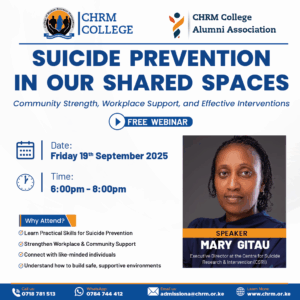
In recognition of the Suicide Prevention Awareness Month, we will be hosting a webinar titled “SUICIDE PREVENTION IN OUR SHARED SPACES: Community Strength, Workplace Support, And Effective Interventions”. See the details below.

Date: Friday 19th September 2025

Time: 6:00pm – 8:00pm

Joining Link: https://shorturl.at/alc6E

Suicide Prevention In Our Shared Spaces 01 300x300

Building Resilience: Why Cybersecurity Training Is Vital in a Digital Age

Cybersecurity has emerged as a critical pillar of organizational and personal security, and as the world becomes interconnected, the College of Human Resource Management (CHRM) recognizes the urgent need for skilled professionals to safeguard sensitive data, systems, and networks from cyber threats. Enrolling in a cybersecurity course is a necessity for individuals and organizations aiming to thrive. 

The digital revolution has ushered in numerous opportunities, but it has also amplified the risks associated with cybercrime. Today, cyberattacks are more sophisticated and frequent than ever before. From ransomware attacks crippling critical infrastructure to phishing schemes targeting unsuspecting employees, cybercriminals exploit vulnerabilities with alarming precision. The rise of artificial intelligence (AI)-powered attacks, deepfakes and internet vulnerabilities further complicates the threat scope. A cybersecurity course equips individuals with the knowledge and skills to counter these evolving threats, making it a rewarding investment.

For businesses, cybersecurity is mandatory. Organizations, from small enterprises to multinational corporations, rely heavily on digital systems to manage operations, store sensitive data, and engage with customers. A single data breach can result in financial losses, reputational damage, and legal consequences. Human resource professionals, in particular, handle vast amounts of sensitive employee data, including personal information, payroll details, and performance records. A cybersecurity course empowers HR professionals with the tools to protect this data, implement secure systems, and foster a culture of cyber awareness within their organizations.

Moreover, regulatory frameworks like the General Data Protection Regulation (GDPR) and local data protection laws in Kenya, such as the Data Protection Act of 2019, mandate stringent data security measures. Non-compliance can lead to hefty fines and legal penalties. A cybersecurity course provides practical knowledge on compliance, risk assessment, and incident response, enabling professionals to align their organizations with these regulations and avoid costly violations.

The global demand for cybersecurity professionals far outstrips the supply, creating a significant skills gap. This gap presents both a challenge and an opportunity, as a cybersecurity course offers a pathway to a high-demand career. Roles such as cybersecurity analysts, ethical hackers, and information security managers are among the most sought-after in the job market, with competitive salaries and growth potential.

At CHRM, the course is designed to bridge this gap by equipping learners with practical, industry-relevant skills. From understanding network security protocols to mastering ethical hacking techniques, the curriculum prepares students to tackle real-world challenges. For HR professionals, integrating cybersecurity knowledge into their skill set enhances their value, enabling them to contribute to organizational security strategies and employee training programs. Employers will prioritize candidates who can combine expertise with cybersecurity acumen, making this course a game-changer for career advancement.

The rapid adoption of emerging technologies like AI, cloud computing, and 5G networks is transforming industries but also introducing new vulnerabilities. For instance, AI-driven attacks can exploit weaknesses faster than traditional methods, while cloud misconfigurations remain a leading cause of data breaches. This course provides hands-on training in securing these technologies, ensuring professionals stay ahead of the curve. 

 A certificate in cybersecurity is not just an option—it’s a necessity. The escalating threat landscape, regulatory pressures, and skills shortage underscore the need for cybersecurity expertise. For HR professionals, the course offers a unique opportunity to enhance their value, protect organizational assets, and drive employee awareness. For individuals, it opens doors to rewarding careers in a high-demand field. By enrolling in CHRM’s cybersecurity course, you are preparing to lead in an era where digital security is paramount. Whether you’re safeguarding employee data, ensuring compliance, or pursuing a career in cybersecurity, this course is your gateway to success and beyond.

Why This is the Perfect Time to Upskill in HR with CHRM

In today’s corporate world, where workplaces are evolving and organizations are prioritizing ethical values, there’s no better moment to invest in your HR career. The College of Human Resource Management (CHRM), a leading institution in Kenya since 1997, offers the tools, expertise and credentials to help you thrive in the field of human resources. With its industry-aligned programs, flexible learning options, and a proven track record of shaping HR leaders, CHRM is your ideal partner to upskill and seize the opportunities in the HR landscape. 


The role of HR professionals has never been more critical. Kenya’s job market is witnessing a surge in demand for skilled HR practitioners, with a 2024 LinkedIn report highlighting a 15% increase in openings for roles in talent acquisition, employee engagement, and HR analytics. Globally, organizations are seeking HR experts who can navigate challenges like hybrid work models, employee wellness, and data-driven decision-making. By upskilling with CHRM, you position yourself to meet these demands, equipping you with the skills to excel in a competitive and evolving industry.

CHRM’s programs, from Certificates to the Certified Human Resource Professional (CHRP) qualification, are designed to deliver practical, industry-relevant skills. Whether you’re a fresh graduate, a career switcher or a seasoned professional aiming to advance, CHRM offers flexible learning options: online, evening or weekend classes that fit your schedule. Starting your journey now ensures you’re ready to capitalize on the growing opportunities in HR.


The HR landscape is also undergoing a transformation. No longer confined to administrative tasks, HR professionals are now strategic partners driving organizational success. CHRM’s curriculum reflects this shift, covering relevant topics like HR analytics, employee and labour relations, data compliance and sustainable workforce strategies. By enrolling at CHRM, you gain access to an education that prepares you for the challenges of modern HR.

For example, CHRM’s CHRP program, accredited by the Human Resources Management Professionals Examinations Board (HRMPEB), emphasizes evidence-based practices and adaptability to current trends. Updated in 2022, the CHRP syllabus equips students to manage HR functions in both public and private sectors, from talent management to labor relations. Short courses and workshops also provide quick upskilling options for professionals looking to enhance specific skills, such as payroll management or employee engagement strategies. By starting now, you can stay ahead in an industry that values innovation and adaptability.


Programs like the Certificate in Human Resource Management, examined by KNEC, include business plan development and research projects, preparing students for roles like HR assistants or training coordinators. CHRP candidates benefit from workplace attachments supervised by CHRM and host organizations, ensuring real-world experience that employers value.


CHRM’s qualifications, backed by partnerships with examination bodies like HRMPEB, KASNEB, and KNEC, are respected locally and internationally. Through collaborations with institutions like the Centre for Open and Distance Learning and Indira Gandhi National Open University (IGNOU), CHRM connects students to a global network of opportunities. These partnerships ensure that your credentials are recognized, whether you aim to work in Nairobi or pursue international opportunities.

CHRM is committed to making HR education accessible to all. With campuses in Nairobi, Mombasa, Kisumu, and Nakuru, and online learning options, the college caters to students across Kenya. Flexible payment plans and scholarships remove financial barriers, ensuring that anyone with ambition can pursue their HR goals. CHRM’s faculty, composed of seasoned HR practitioners, offer mentorship and industry insights, creating a supportive learning environment where students thrive.


Beyond academics, CHRM’s career support services, including CV workshops, job placement assistance, and networking events, helping graduates transition seamlessly into the workforce. The demand for skilled HR professionals is growing, and there’s no better time to invest in your career. By upskilling with CHRM, you’re equipping yourself with the knowledge, skills, and credentials to lead in the future of work. Whether you’re starting with a certificate, advancing to a diploma, or pursuing CHRP, CHRM offers the flexibility, practicality and support to help you succeed.

Don’t wait for the “right” moment, the time to act is now. Visit College of Human Resource Management to explore CHRM’s range of programs, from certificates to executive trainings, and take the first step toward a rewarding HR career. With CHRM, youa are building a future where you can shape workplaces, empower employees, and drive organizational success.

The Power of Professional Certifications: Why CHRM’s Programs Stand Out

In an era where businesses are grappling with rapid technological advancements, shifting workforce dynamics and heightened expectations for employee engagement, HR professionals are at the forefront of organizational success. The modern HR practitioner is no longer just an administrator but a partner who drives talent development, fosters inclusive cultures and ensures compliance with industry regulations. To meet these demands, professional certifications have become indispensable, offering HR professionals the credentials, skills and confidence to excel. CHRM College stands as a beacon of excellence, delivering world-class certification programs like the Certified Human Resource Professional (CHRP), Global Professional in Human Resources (GPHR) and specialized courses accredited by leading bodies. But what makes CHRM’s certifications so powerful, and why do they resonate with both aspiring and seasoned HR professionals? Let’s take a look into the impact of these programs and why CHRM is the institution of choice.

The HR landscape has evolved dramatically over the past decade. From navigating work models to adopting AI in recruitment, today’s HR professionals must be agile, tech-savvy and strategic. A 2024 report by the Society for Human Resource Management underscores the value of certifications, noting that certified HR professionals earn up to 20% more than their non-certified counterparts and are more likely to secure leadership roles. In Kenya, where organizations are aligning with global standards while addressing local challenges like labor law compliance, certifications are increasingly seen as a prerequisite for senior HR positions in sectors ranging from banking to manufacturing.

Professional certifications validate expertise in critical areas such as talent acquisition, employee relations, performance management and organizational development. They also demonstrate a commitment to lifelong learning, a trait employers value in a field where trends like employee wellness, diversity and digital transformation are constantly reshaping priorities. For HR practitioners, earning a certification is not just about career advancement, it’s about gaining the tools to create impact in the workplace. CHRM’s programs are designed to deliver this transformative value, equipping graduates to thrive in both local and global markets.

CHRM has cemented its reputation as Kenya’s premier institution for HR education, combining academic rigor with practical, industry-relevant training. Its certification programs, including CHRP, HRCI-accredited courses, and offerings recognized by the Human Resource Management Professionals Examinations Board, are tailored to meet the needs of today’s workplace. 

  • A Curriculum Rooted in Relevance

CHRM’s programs are built on a curriculum that bridges local and global HR demands. CHRP, for instance, covers essential topics like Kenyan labor laws, strategic HR management and organizational behavior, ensuring graduates are well-versed in the local regulatory landscape. At the same time, the curriculum incorporates global trends, such as AI-driven HR analytics and inclusive leadership, as highlighted in CHRM’s 8th Annual Talent Summit in Mombasa in 2024. This forward-thinking approach ensures that CHRM-certified professionals are not just prepared for today’s challenges but are ready to lead tomorrow’s innovations.

  • Faculty with Real-World Expertise

One of CHRM’s greatest strengths is its faculty, a blend of scholars and seasoned practitioners who bring real-world insights to the classroom. Whether it’s navigating collective bargaining agreements or designing employee wellness programs, CHRM’s instructors provide practical guidance that students can immediately apply. This hands-on approach is valuable in trainings like the Employee and Labor Relations Clinic, where students simulate real-world HR scenarios, honing skills that employers value.

  • Flexible Learning for Diverse Learners

CHRM recognizes that its students come from varied backgrounds; fresh KCSE graduates, mid-career professionals and even senior executives. To accommodate their needs, the college offers flexible study modes, including sunrise, evening, Saturday and distance learning. The William Gitobu Memorial Library, a state-of-the-art resource hub, further supports students with access to journals, case studies, and digital tools. This flexibility ensures that no one is left behind, regardless of their schedule or circumstances.

  • Global Recognition and Accreditation

CHRM’s certifications carry significant weight both locally and internationally. The CHRP, accredited by HRMPEB, is widely regarded as the gold standard for HR professionals in Kenya, with employers prioritizing it for roles like HR business partner or talent manager. Meanwhile, partnerships with global bodies like HRCI enable CHRM to offer certifications such as The Associate Professional in Human Resources, which are recognized in over 100 countries. This global recognition empowers CHRM graduates to pursue opportunities in multinational corporations or even relocate abroad.

  • Practical Training and Industry Connections

CHRM goes beyond theoretical learning, emphasizing practical training that prepares students for real-world challenges. Through initiatives like the Professional Mediator Certification Program, students practice skills like conflict resolution, policy drafting and workplace investigations. Additionally, CHRM’s strong industry ties, evident in events like the Talent Summit, provide great networking opportunities. These trainings give CHRM students a competitive edge, often translating into job placements or career advancements.

In a world where HR is evolving into a strategic powerhouse, professional certifications are more than just credentials; they’re a gateway to influence, opportunity and impact. CHRM’s programs stand out for their relevance, flexibility and global credibility, making them the ideal choice for anyone looking to excel in HR. Whether you’re a recent graduate eager to break into the field, a mid-career professional seeking to upskill or a leader aiming to globalize your expertise, CHRM has a certification to match your ambitions.

. With CHRM, you’re not just earning a certification; you’re building a career that shapes the future of work.

Environmental, Social & Governance (ESG): A Fundamental Shift Reshaping the Future of Business

The global business landscape is undergoing a noticeable transformation, with Environmental, Social, and Governance (ESG) principles emerging as central pillars shaping how companies define success and create value. Once considered peripheral concerns, these principles have evolved into critical aspects of corporate strategy, risk management and long-term sustainability. Organizations across industries are recalibrating their methods to respond to the growing expectations of investors, customers, employees, regulators and societies at large by integrating ESG factors into their operations.

ESG frameworks rest on three interconnected pillars. Environmental considerations focus on responsible management of natural resources, reducing pollution, waste management, and addressing climate change. Social criteria encompass workforce diversity, equitable labor practices, community engagement, and consumer protection. Governance covers ethical leadership, transparency, accountability, compliance and effective corporate oversight. Importantly, these dimensions are no longer optional concerns; they are critical to business resilience and sustainability, shifting the focus from short-term profit maximization to long-term value creation with positive social and environmental impact.

This shift has reshaped how companies do business across virtually every facet. First, ESG has become integral to risk management and regulatory compliance. Environmental risks such as climate change and resource scarcity, along with social risks like labor disputes and community opposition, pose significant threats to business continuity. Governance failures often erode investor trust and can lead to legal repercussions. As a result, companies incorporate ESG risk assessments into core governance frameworks, striving to anticipate regulatory changes and minimize reputational damage through enhanced transparency and stakeholder engagement.

Another powerful force driving ESG adoption is the evolution of capital markets. Increasingly, institutional investors and asset managers consider ESG credentials a proxy for quality management and sustainable returns. The surge of ESG-focused funds and indexes means companies without credible ESG strategies risk losing access to vital capital. Responding to this shift, businesses are developing comprehensive ESG disclosures aligned with globally recognized standards, helping investors evaluate how companies manage their environmental and social footprints and governance practices.

At the same time, workforce expectations are reshaping company cultures and priorities. Employees today, particularly younger generations, want to work for organizations that demonstrate a genuine commitment to sustainability, diversity, and ethical conduct. Such commitments enhance employee engagement, productivity, and loyalty. Human resource management now plays a vital strategic role in embedding ESG values into corporate culture and talent policies to attract and retain top talent while fostering inclusive and innovative environments.

ESG considerations are also proving to be powerful drivers of innovation and competitive advantage. Challenges related to sustainability, social equity and governance demand new solutions. Companies embracing ESG are developing sustainable products, adopting circular economy principles, and improving energy efficiency, opening new markets and revenue streams. These efforts not only reduce environmental and social impact but also strengthen brand equity and customer loyalty, differentiating businesses in crowded marketplaces.

Underlying all these changes is a commitment to long-term value creation. ESG-driven business models emphasize resilience and sustainable growth rather than quick profits. They foster trust and goodwill among stakeholders, which are critical assets that support enduring success. Companies that actively consider their broader societal and environmental ecosystems contribute to a more stable, prosperous future benefiting both business and communities.

Despite the momentum behind ESG, the journey is not without its challenges. Skepticism surrounds concerns that some companies superficially adopt ESG agendas for public relations with little substantive progress, a practice often called “greenwashing.” The lack of standardized reporting frameworks complicates benchmarking and comparison across companies and sectors, leading to confusion among investors and other stakeholders. Furthermore, integrating ESG into core operations can be complex and resource-intensive, especially for smaller firms balancing profit pressures with evolving social and environmental demands.

ESG conventions and forums play a crucial role in addressing these challenges by bringing together stakeholders from business, finance, government, and civil society. These events provide platforms for sharing knowledge, harmonizing standards, and fostering accountability and collaboration. Through keynote addresses, workshops, panel discussions, and networking, participants gain practical tools and insights for translating ESG principles into meaningful actions and measurable results rather than mere statements of intent.

For example, the College of Human Resource Management (CHRM) will host an Environmental, Social & Governance Convention in Naivasha from August 12th to 15th, 2025. This four-day event will convene HR leaders, sustainability advocates, and business professionals to explore how ESG is reshaping organizations and creating lasting impact. The convention highlights the pivotal role of human resource management in embedding ESG values across corporate culture, strategy, and execution and offers attendees a chance to engage deeply with ESG thinking and practice.


Looking forward, ESG has become the blueprint for future business success. Organizations that embrace ESG principles proactively are better positioned to manage risks, attract capital, engage employees, innovate and create long-lasting value. The true winners will be those that integrate ESG authentically into their core, turning commitments into concrete actions and measurable outcomes that benefit both their organizations and the wider world.

As the global business community rallies around ESG, conventions like CHRM’s ESG event serve as catalytic spaces for transformation. These gatherings help move ESG from abstract ideals to practical realities; pushing companies to innovate, collaborate and lead toward a more sustainable, equitable, and well-governed future.

CHRM Students Council Inaugurated in Ceremony Marking New Chapter of Empowerment and Service

On July 30, 2025, the College of Human Resource Management (CHRM) hosted a momentous swearing-in ceremony for the newly elected student leaders of the CHRM Students Council. The event, held at the college’s main campus, marked a significant milestone in the institution’s student governance, as the elected leaders took their oaths of office, pledging to serve their peers with dedication and integrity. The ceremony, presided over by a distinguished advocate, was a blend of formality and celebration, reflecting the college’s commitment to fostering leadership among its students.

The swearing-in was graced by key members of the CHRM administration, underscoring the institution’s support for student leadership. Among the notable attendees were Milkah Murimi, HR Admin and Executive Assistant to the Principal, Simon Kachibo, Learning Coordinator, Linet Chedeye, Head of Academics, and Stephen Olu Satima, CHRM Exams Officer. Their presence highlighted the importance of the occasion and the college’s investment in nurturing a collaborative relationship between the administration and the student body.

The newly elected student leaders, chosen through a democratic process by their peers, represent a group tasked with steering the CHRM Students Council toward a future of inclusivity, innovation, and excellence. Leading the council is Kiprotich Amos, sworn in as President, whose vision and charisma earned him the trust of the student body. Supporting him is Marion Ndungu, the Vice President. Moses Mukuta, the Secretary General, brings organizational prowess that will ensure the council’s operations run smoothly, while Marion Ongeri, the Academics Representative, is poised to advocate for academic excellence and support.

The council also welcomed Daniella Mutai as the Social Affairs Representative, Josee Peter, sworn in as Treasurer, who will oversee the council’s financial responsibilities, ensuring transparency and accountability. Rounding out the team is Ben Mukanya, the Sports and Entertainment Representative, whose creativity promises an engaging calendar of events to foster camaraderie and school spirit.

The ceremony itself was a solemn and uplifting affair. The advocate administering the oaths emphasized the weight of the responsibilities the leaders were undertaking, reminding them of their duty to serve with integrity, fairness, and a commitment to the welfare of their fellow students. Each leader, standing before their peers and the administration, recited the oath with conviction, pledging to uphold the values of CHRM and champion the interests of the student community.

The swearing-in of Kiprotich Amos, Marion Ndungu, Moses Mukuta, Marion Ongeri, Daniella Mutai, Josee Peter, and Ben Mukanya marks the beginning of an exciting chapter for CHRM. With their diverse talents and shared commitment, the leaders are well-positioned to inspire and uplift the student community, leaving a lasting impact on the institution’s legacy of excellence.

1 2 3 4 5 … 8