Blog

Category

22231acd 1d07 4c78 ad81 fa8c7750f507

A New Door Is Opening: Join Us This September

There’s a young man in Kisumu who has spent the last year doing casual jobs he’s overqualified for, not because he lacks ambition, but because he’s been waiting, waiting for the right course, the right timing, the right sign that this is the year he finally goes back to class. If you’ve been waiting for a sign too, this is it: CHRM’s September intake is open, and there’s a place in it for you.

More Than an HR College

Ask around and most people will tell you CHRM is “the HR college.” They’re not wrong, we are the institution behind the Certified Human Resource Professional (CHRP) qualification that shapes how Kenyan workplaces are run, but that’s only part of the story. Walk through any of our campuses in Nairobi, Mombasa, Kisumu, or Nakuru this September and you’ll find students training in Accounting, Marketing, Supplies Management, Business Management, ICT, Cyber Security, and Community Development, alongside our HR programmes. Whether you’re drawn to KASNEB’s accounting and procurement pathways, HRMPEB’s HR certifications, KNEC’s technical and business courses, or ICDL’s computer proficiency training, this September has a course with your name on it.

Our programmes run across levels too, Artisan, Certificate, Diploma, and Higher Diploma, so wherever you are on your academic journey, whether you’re starting fresh from KCSE or building on a certificate you already hold, there’s an entry point built for you.

Why September Matters

September isn’t just another date on the calendar. For many, it’s the natural fresh start: the point where a new financial year, a new work schedule, or simply a new resolve to invest in yourself lines up with a new academic semester. For KCSE candidates and their families, it’s often the first real opportunity to translate exam results into a concrete plan. For working adults, it’s a chance to enrol before the year gets away from you again, the way it may have last January, and the January before that.

Waiting rarely makes the decision easier. It only pushes the same goal further down a calendar that keeps refilling itself with other things. September is simply a good, deliberate place to start.

Why Study With CHRM

Three things set a CHRM education apart, and they’re worth sensitizing every prospective student to before they choose where to enrol.

First, our accreditation is real and wide-reaching. We are licensed by the Ministry of Education as a TVET institution, and we sit as an accredited study and examination centre for HRMPEB, KASNEB, HRCI, KNEC, and ICDL. That matters practically: the certificate you walk away with is recognised, respected, and tied to bodies that Kenyan employers already trust.

Second, our training is practical, not just theoretical. From our earliest days as the training arm of the Institute of Human Resource Management, CHRM has built its name on producing practitioners, not just certificate holders. Our HR programmes, for instance, don’t simply teach HR theory; they shape people who understand how to fix real workplace problems, the kind Naliaka’s mother faced when she was let go after eleven years without a written contract. That same practical philosophy runs through our accounting, marketing, ICT, and business programmes.

Third, we meet you where you are. In partnership with the Centre for Open and Distance Learning, we serve as a recruitment centre for Indira Gandhi National Open University (IGNOU), giving our students pathways into degree-level study without uprooting their lives. Add to that our multiple campuses, flexible study modes, and a faculty genuinely invested in seeing students succeed, and you have an institution built around real people’s real constraints, not around a one-size-fits-all academic calendar.

An Investment, Not Just an Expense

Every course at CHRM is, in the end, an answer to the same question the young man in Kisumu keeps asking himself: is this the year I stop waiting? Whether your interest lies in human resources, accounting, marketing, ICT, cyber security, or community development, September is your opening, and it is one built on solid ground: real accreditation, real practical training, and real flexibility for people juggling real lives.

Don’t let this become another intake you meant to join. Visit any CHRM campus in Nairobi, Mombasa, Kisumu, or Nakuru, reach out through www.chrm.or.ke, or call our admissions offices to secure your place before the September intake fills up.

Your course is waiting. So are we.

18e0cfda dffd 4c60 8cce 7afea5a8c80e

The Ground Keeps Shifting: Why HR Can No Longer Afford to Stand Still

There’s a young HR officer in Nairobi who was hired to do the things HR has always done: file leave requests, manage payroll queries, mediate the occasional disagreement between a supervisor and a junior staff member. Eighteen months into the job, her role looks nothing like her job description. She’s now expected to understand data protection law, design hybrid work policies, manage an AI tool that shortlists candidates, and explain to a nervous CEO why “quiet quitting” is trending on LinkedIn. Nobody retrained her. The ground simply moved, and she had to move with it, or be left behind by it.

Her story isn’t unusual. It’s the story of HR itself, everywhere, right now.

HR Has Outgrown Its Old Job Description

For decades, Human Resource Management sat quietly at the edges of the organisation, a department associated with hiring paperwork, disciplinary letters, and the occasional office party. That version of HR is disappearing fast. What has replaced it is a function expected to sit at the strategy table: shaping culture, managing risk, driving performance, and increasingly, deciding how far and how fast technology should be allowed into the employer-employee relationship.

Globally, the shifts are unmistakable. Remote and hybrid work rewired what “workplace” even means. Artificial intelligence now touches recruitment, performance reviews, and even termination decisions, raising ethical questions HR has never had to answer before. Employees, especially younger ones, are asking harder questions about purpose, mental health, and fairness, not just salary. Regulatory environments are tightening around data privacy and workers’ rights. HR professionals today are not administrators of policy; they are architects of how organisations survive change.

The Kenyan Reality Is Its Own Chapter

In Kenya, this shift carries a distinctly local weight. Our labour market is young, fast-growing, and increasingly informal in places where it shouldn’t be, casual contracts, delayed wages, workers dismissed without process or explanation. Naliaka’s mother, the woman who worked a flower farm for eleven years without a written contract only to be let go without warning, is not a rare case. She is a symptom of an HR gap that Kenya still needs to close.

At the same time, Kenyan workplaces are modernising at real speed. Gig work platforms, fintech-driven payroll, remote teams serving international clients from Nairobi, all of it demands HR practitioners who understand both the letter of Kenyan labour law and the pace of global best practice. The organisations that will thrive in the next decade are the ones whose HR teams can do both at once: protect workers the way Naliaka’s mother should have been protected, while building systems agile enough to compete globally.

Where CHRM Comes In

This is precisely the space CHRM exists to fill.

CHRM was never built to produce HR generalists who can only recite theory. It was built to produce practitioners who understand the mechanics of Kenyan labour law as thoroughly as they understand the direction global HR is heading, people who can walk into a flower farm in Naivasha or a fintech office in Nairobi’s CBD and know exactly what fair, effective, forward-looking HR looks like in either setting.

That dual fluency, deeply local and genuinely global, is CHRM’s real advantage. It’s what allows CHRM graduates to sit in a boardroom and speak the language of workforce analytics and AI-assisted talent management, while never losing sight of the worker whose leave days were never honoured, or whose contract never existed on paper.

Leveraging that position means CHRM has a responsibility that goes beyond the classroom: to keep curricula current with how fast HR is changing, to keep pushing its graduates into the rooms where policy and strategy are decided, and to keep insisting, loudly, that good HR is not a cost center, it is the difference between organisations that retain talent and organisations that quietly bleed it.

A Function Worth Investing In

The HR officer in Nairobi, the one whose job outgrew her job description, didn’t fail. She adapted, the way HR itself must keep adapting. The organisations, and the countries, that take that seriously, that invest in practitioners who can hold both the Kenyan context and the global conversation in the same hand, are the ones that will build workplaces worth showing up to.

That is the work CHRM has chosen. Not to teach HR as it was, but to shape the people who will decide what it becomes next, here in Kenya, and wherever Kenyan-trained HR talent is needed in the world.

36459

One Step Can Change a Life

One Step Can Change a Life: Walk With Us for the CHRM Scholarship Fund

There’s a girl in Kericho who wakes up before the sun does. Not because she wants to, but because fetching water and getting her younger siblings ready for school takes that long, before she can even open her own books. Her hands are cracked from the cold jerrican handle. Her high school uniform sits folded in a paper bag under her bed, the only “good” clothing she owns. Let’s call her Naliaka. She isn’t a real person, but her story belongs to hundreds of bright, hardworking young Kenyans who finish school with grades that should fling doors wide open, only to watch those doors stay shut, quietly, without explanation, because there isn’t enough money.

Naliaka dreams of studying Human Resource Management. For years she watched her mother toil on casual shifts at a flower farm, no written contract, no leave days, no one in her corner when she was dismissed without warning after eleven years of service. That night, it was Naliaka who held her mother as she wept, the daughter becoming, briefly, the parent. It was then she made up her mind: she would become the kind of person who fixes that, for her mother, and for the thousands of workers like her. She chose CHRM College, the College of Human Resource Management, because she’d heard it doesn’t simply teach HR theory; it shapes practitioners who go on to change how Kenyan workplaces treat people, from the inside out.

She got in. She read the acceptance letter four times, sitting on the edge of her bed, before she let herself believe it. Then the invoice came, and something in her chest went quiet.

This is where so many stories like Naliaka’s end, not loudly, but in silence. Not because the dream wasn’t big enough, but because nobody could find the fees in time. A semester gets deferred. Deferred becomes “maybe next year.” Next year becomes a memory of a letter once kept under a pillow. A young woman who might have spent her career protecting workers’ rights instead settles for something smaller, not by choice, but because no one walked with her when it mattered.

At CHRM we have built our name on quality education and rigorous, practical training. But a great curriculum means nothing to a student who can’t afford to sit in the classroom. That is exactly why the CHRM Scholarship Fund exists, and exactly why we need you, yes, you, reading this.

On 27th June 2026, the CHRM CAlumni Association is hosting the CHRM Scholarship Fund Walk at Ngong Road Forest, and we would love nothing more than to see your face in that crowd.

This isn’t just a walk. It’s a few hours of fresh forest air given freely, so that somewhere, a young person you’ll probably never meet gets to stay in school. Every step taken, every shilling raised, becomes part of someone else’s tuition, someone else’s “yes, you can.”

Whether you want to be a mentor, find a mentor, or simply network and keep fit, this is the place to be. We are committed to inclusivity, which is why we’ve introduced a Comrades Special Offer: just Ksh 1,000 for students from any institution, not only CHRM. Bring your student ID and secure your slot today. For other members of the public, registration is Ksh 2,000, and every shilling is somebody’s bus fare to class, somebody’s textbook, somebody’s relief.

We also warmly welcome corporates to walk with us, as teams, as sponsors, or simply as organisations that believe talent shouldn’t be wasted for lack of fees. Your presence and partnership help more young people stay in school.

Here’s how to be part of it:

– Date: 27th June 2026

– Venue: Ngong Road Forest

– Comrades Offer: Kshs 1,000 (students, any institution, with student ID)

– General Registration: Kshs 2,000 (members of the public)

– Corporates: Welcome as teams or sponsors

– Pay via Lipa na M-Pesa: Paybill 522123, Account No. 80295KWalk

Questions or group registration: 0718 781 513, WhatsApp 0784 744 412, email info@chrm.or.ke, or www.chrm.or.ke.

Somewhere right now, there is a Naliaka rehearsing how she’ll ask for help, or deciding not to ask at all because she’s too downcast, or too tired of hearing no. Maybe it’s a young man in Turkana, walking three hours to a cyber cafe  just to check if his scholarship application went through. Maybe it’s a single mother in Kibera, retraining in HR at night so her children inherit something better than what she had. You may never know their names, or see the graduation photo. But you will have been the reason it exists.

So lace up your shoes. Gather your friends, your colleagues, your family. Come breathe in the green quiet of Ngong Road Forest, and leave behind something far greater than footprints.

Register today. Show up on the 27th. Let’s make sure that for every Naliaka out there, the only thing standing between her and her career is a few kilometers we were glad to walk for her.

See you at the start line.

excited,happy,teacher,explaining,a,math,lesson,to,a,classroom

10 Signs You Are Raising an ICT Person

From Cassette Tapes to Artificial Intelligence: My Journey Through Technology

I was born in a small village in Meru, Kenya, in 1990. At that time, technology was not something we talked about every day. In fact, the most advanced technology many of us interacted with was a radio cassette player.

If a cassette tape got stuck or the batteries ran low, sometimes the quickest solution was to rotate the tape manually and hope your favorite song would play again.

While we were doing that in rural Kenya, something remarkable was happening thousands of kilometers away across oceans and continents. Between 1990 and 1995, the world was witnessing a revolution in computing.

Personal computers were finding their way into homes and offices. Microsoft was preparing operating systems that would change how people interacted with computers. The internet, though still young, was beginning to connect universities, businesses, and eventually ordinary people.

My father owned what I considered one of the finest pieces of technology available to us: a radio cassette player. To me, it was a magical machine.

My uncle, who lived and worked in Nairobi, became the first person in our village to own a mobile phone. This was around 1995.

Then one day, my uncle arrived carrying something I had never seen before. A mobile phone. Not the sleek smartphones we carry today. This thing had an antenna protruding from the top like a miniature radio tower.

Looking back, I now realize that mobile technology became one of the greatest catalysts for computing advancement.

Fast forward to today. We have smartphones more powerful than the computers that helped send humans to the moon. We have cloud computing, cybersecurity, machine learning, and Artificial Intelligence transforming nearly every industry.

And now, I find myself watching my own son standing next to my laptop, completely captivated by it.

The same curiosity I felt when I first saw my uncle’s mobile phone seems to be emerging in him.


10 Signs You Might Be Raising an ICT Person

1. They Are Naturally Curious About Gadgets

They don’t just use devices. They study them.

2. They Watch Closely When Technology Is Being Used

Before they can even read, they often sit beside adults operating phones, televisions, laptops, or tablets and observe every movement.

3. They Love Pressing Buttons

To a future ICT professional, every button is an experiment.

4. They Learn Device Navigation Quickly

Without formal instruction, they somehow discover where apps are, how to unlock screens, and how to navigate menus.

5. They Try to Solve Problems

When something stops working, they don’t immediately give up. Instead, they start experimenting.

6. They Enjoy Building Things

Whether it’s blocks, toys, puzzles, or digital creations, many future ICT professionals enjoy constructing systems.

7. They Ask Endless Questions

“Why?” “How?” “What happens if…?” Curiosity is the fuel of every technologist.

8. They Are Fascinated by Screens

Not merely for entertainment, but because screens represent interaction, information, and possibilities.

9. They Learn Patterns Quickly

Technology is built on patterns and logic.

10. They Keep Returning to Technology

Most importantly, the interest never fades.

Looking Back

When I reflect on my own life, I can now see the signs were there from the beginning.

The excitement of a radio cassette. The wonder of seeing electricity arrive in our village. The amazement of witnessing the first mobile phone. The curiosity that never went away.

Technology changed my life. Not because I was born surrounded by it. But because I was curious about it.

Today, as I watch my son reaching for a laptop with the same fascination I once had for a mobile phone with an antenna, I am reminded that every technological journey starts with a simple question:

“What is this thing, and how does it work?”

For parents reading this, pay attention to those small moments. You might be witnessing the first signs of a future software developer, cybersecurity expert, network engineer, AI researcher, data scientist, or technology innovator.

ed884118 d10e 466f a4ce db6831173b39

You Know You’re a CHRP Student When….

You know the feeling. You’re sitting in Java, standing in a bank line, or scrolling through your professional feed, and you spot someone. They aren’t wearing a uniform, but everything about how they talk, think, and look at the world screams “I am a Certified Human Resource Professional (CHRP) student!”

CHRP isn’t just a course you take to get a certificate; it’s a total rewiring of the brain. Whether you are deep into your blocks or just getting started, the program changes how you view people, structures, and workplace dynamics.

If you’ve been wondering whether the transformation has fully taken hold of you, or if you’re trying to spot one of us in the wild, here is how CHRP students instantly give themselves away, broken down from every angle of the ecosystem.

  1. The Career Shifter: Spotting the “Aha!” Moment

For those who transitioned into HR from accounting, marketing, or customer service, the giveaway is a sudden, passionate obsession with employment law and employee relations.

  • The Sign: They used to look at a workplace conflict and think, “Wow, that’s messy.” Now, they lean in, narrow their eyes, and think, “Wait, does this breach Section 41 of the Employment Act?”
  • Why it gives them away: They bring CHRP concepts into completely unrelated casual conversations. You’ll hear them advising friends on their contract terms over weekend coffee, pulling out terms like “constructive dismissal” or “procedural fairness” with the intense energy of a convert who has finally found their true calling.
  1. The Seasoned HR Practitioner: Spotting the Strategic Level-Up

These are the students who are already working in HR but need that kind of certification to unlock senior leadership roles and global opportunities.

  • The Sign: They completely stop using the phrase “The policy says…” and start saying, “From a strategic workforce planning perspective…”
  • Why it gives them away: In meetings, they no longer just execute tasks; they look at everything through the lens of human capital ROI (Return on Investment). You can spot them because they are the ones constantly bridging the gap between empathy and the company balance sheet. They smile knowingly during high-level corporate restructures because they finally understand the deep organizational theory behind the madness.
  1. The Lecturer’s View: Spotting the “Classroom Crusaders”

Ask any seasoned CHRP lecturer, and they’ll tell you they can spot a dedicated student within five minutes of the first session.

  • The Sign: They don’t just ask questions to pass exams; they bring real-life, raw, unvarnished workplace dilemmas to class to stress-test the theories.
  • Why it gives them away: They are the ones who passionately debate case studies as if a real employee’s livelihood is on the line right that second. When a lecturer brings up a complex dispute scenario, the CHRP student doesn’t just take notes, their face lights up, they lean forward, and they treat the classroom like a supreme court room for workplace justice.
  1. The Educator’s Angle: Spotting the Holistic Thinker

From an educational development perspective, CHRP changes how a student processes information. It’s the shift from rote learning to high-level critical thinking.

  • The Sign: Their notebooks and minds are no longer organized by simple definitions. They think in frameworks, competencies, and ethical pillars.
  • Why it gives them away: They look at a business problem and immediately map out how it impacts culture, compliance, talent retention, and leadership pipelines all at once. They’ve developed a 360-degree vision for organizations, realizing that you cannot tweak one part of a company without sending ripples through the entire workforce.
  1. The Institution’s Perspective: Spotting the “Campus Trailblazers”

For an institution hosting these brilliant minds, CHRP students are a completely distinct breed on campus. They aren’t just here to sit in a lecture hall; they are building a community.

  • The Sign: They are absolute masters of professional networking and peer support.
  • Why it gives them away: You’ll spot them huddled in the common areas or active on WhatsApp groups, not just sharing assignment tips, but actively sharing job openings, organizing study marathons, and talking about how to elevate the entire profession. They carry themselves with a distinct blend of approachable warmth and boardroom-ready professionalism. They are the heart of the “nation” of future leaders.
  1. The “Accidental” Angle: The Everyday Lifeshifter

There is one bonus giveaway that transcends all the other categories, how a CHRP student handles their personal life.

  • The Sign: They start applying HR management principles to their family, friends, and personal goals.
  • Why it gives them away: Don’t be surprised if a CHRP student subtly tries to introduce a “Performance Management Plan” for house chores, references “conflict resolution frameworks” during a minor family disagreement, or structures their personal fitness goals into a strict competency matrix. Once you learn how to optimize human behavior, it’s hard to turn it off!

Giving yourself away as a CHRP student isn’t something to hide, it’s a badge of honor. It means you’ve stopped viewing people as just “resources” and started viewing them as the absolute core of organizational success.

Are you recognizing these signs in yourself or your colleagues? It means the transformation is working. Keep pushing, keep analyzing, and keep setting the standard for the future of work!

388995a1 55f1 4bba a381 0f8d7f9070fd

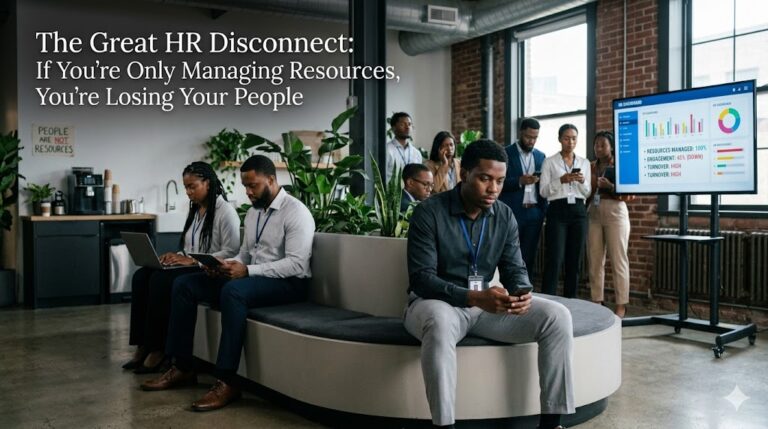
The Great HR Disconnect: If You’re Only Managing Resources, You’re Losing Your People

Anthony started his new job at CATCO Limited Group with the kind of first-day energy we all remember. From the outside, the company looked like an absolute powerhouse, the kind of brand name you proudly put at the top of your LinkedIn profile. He had passed the interviews, signed the contract, and showed up on Monday morning ready to make a massive impact.

But the moment he walked through the glass doors? Silence.

Nobody was actually ready for him. His laptop was yet to be procured. His corporate email account hadn’t been provisioned. To make matters worse, his new manager was trapped in back-to-back emergency meetings and could only offer a rushed, “Hey, welcome! Just sit tight for a bit.”

That “bit” turned into two full weeks. Anthony spent his first fortnight at his desk, awkwardly scrolling between TikTok and Instagram, reading outdated PDF manuals, and drinking too much office coffee. As the hours dragged on, one question kept looping in his mind: “Why on earth did they rush to hire me if they didn’t actually have a plan for me?”

Within six months, Anthony was quietly sending out his CV to competitors.

The Cost of the “Transaction” Trap

Anthony’s story isn’t rare. In fact, if you ask around any modern office, you’ll find dozens of people who have lived through some version of the “Two-Week Ghost” onboarding disaster.

It happens because many organizations are still stuck in an old-school way of thinking. They treat recruitment like a mere transaction: A seat is empty, fill the seat, check the box, move on. They focus entirely on the paperwork of hiring rather than the actual human experience of welcoming a living, breathing professional into the business.

When HR operates in a silo, detached from the actual day-to-day realities and future direction of the business, this is exactly where the wheels come off. The company knew they needed a “resource” on the payroll spreadsheet, but they completely forgot they were hiring a person.

From HR to “People”: The Evolution is Non-Negotiable

For decades, human resources were treated like the workplace police or a glorified administrative department. It was all about tracking leave days, filing forms, and issuing warning letters.

But the business landscape has shifted permanently. We are moving rapidly from traditional “Human Resources” to a true focus on People.

What’s the difference? Resources are things you use up, manage with a spreadsheet, and replace when they break down. People are individuals with ambitions, anxieties, skills, and potential.

When an organization fails to make this mental shift, they start treating their workforce as a generic block of assets. They handle human problems with rigid, blanket policies instead of sit-down conversations. If HR misses this evolution, the organization doesn’t just lose cultural points, it loses its best talent, its competitive edge, and ultimately, its revenue.

The Paradox: The More Tech-Savvy We Become, the More Human We Need to Be

There is a huge conversation right now about automation, AI, and digital transformation in the workplace. Many practitioners are worried that technology will make human professionals obsolete.

But the reality is exactly the opposite: The more digital our workplaces become, the more critical our human skills become.

Think about it. A software program or a chatbot can easily handle leave approvals, calculate payroll, or screen thousands-of-words CV for keywords. Technology is great at handling the routine, repetitive data.

But a machine cannot handle a nuanced culture shift. A chatbot cannot sit across from an employee who is burnt out or dealing with a personal crisis and offer genuine empathy. A piece of software cannot look at a fractured team dynamic and rebuild trust.

By letting technology handle the heavy lifting of administration, HR professionals are finally being freed to do what they should have been doing all along: focusing on deep empathy, strategic alignment, and the psychological safety of their teams.

Realigning for the Future: Knowing Where the Business is Going

If HR doesn’t have a clear window into where the business wants to be in the next three to five years, it is impossible to hire effectively today.

Too many companies are still hiring for the past. They look at what the company needed two years ago, write a rigid job description based on old software and outdated frameworks, and then wonder why their new hires feel irrelevant within six months.

We need to start hiring for agility, curiosity, and the ability to learn and unlearn. If the business is planning to expand into digital spaces or new regional markets, HR needs to be ahead of the curve, shaping a culture and a talent pipeline that can sustain that growth before the expansion happens.

The Bottom Line:

If HR misses the strategic direction of the business, the entire organization loses its footing. Anthony didn’t leave CATCO because he hated the work; he left because the organization showed him right from day one that they didn’t know how to value his human potential.

It’s time to stop managing resources and start leading people. Because at the end of the day, a company’s future isn’t built by its systems, it’s built by the humans running them.

1ebbf40c d74d 492e 8942 a17df6336f86

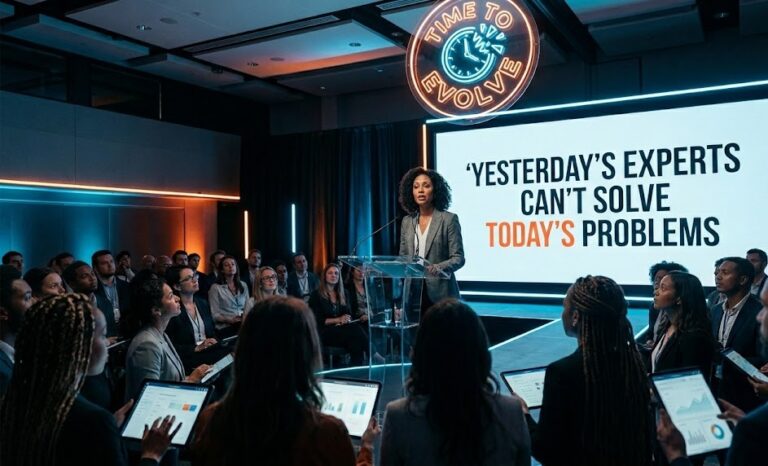
Yesterday’s Experts Can’t Solve Today’s Problems: A Wake-Up Call for HR Professionals

Think back to the intense protests regarding fuel prices that brought everything to a standstill barely a fortnight ago.

All public transport was completely suspended, roads were blocked, and commuting was fundamentally impossible. It wasn’t a matter of employees being lazy; they were automatically and completely forced to stay at home for safety.

Yet, how did some HR departments handle it? There were still managers and HR professionals who tried to enforce rigid, old-school 9-to-5 desk policing, desperately sending out emails demanding people show up simply because “that’s what the manual says.”

By ignoring reality, they completely lost the trust of their teams. Meanwhile, organizations that had stubbornly resisted modern workplace flexibility were hit with a massive shock, work was completely suspended for two whole days because they didn’t have a backup plan. This single crisis forced those lagging companies to frantically start drafting and enforcing remote work policies.

It exposes a hard, uncomfortable truth that every single one of us in the profession needs to face: Yesterday’s experts cannot be today’s experts.

If you are relying entirely on the credentials, theories, and rigid habits you picked up years ago to manage people today, you aren’t just falling behind, you are becoming a liability to your organization.

The Danger of the “15-Year” Illusion

We see it on CVs and LinkedIn all the time: “15 years of HR experience.”

But here is the real question we need to ask ourselves: Is that actually 15 years of deep, evolving, strategic experience? Or is it just one single year of experience repeated 15 times?

Having a long career in Human Resources is admirable, but longevity does not automatically equal relevance anymore. The recent fuel crisis, Covid- 19 pandemic proved that the workplace changes overnight. If your approach to crisis management, talent oversight, and employee engagement is exactly the same as it was a decade ago, you are managing a workforce that no longer fits into your rigid boxes.

Before we can step into a boardroom and tell business owners how to transform their companies, we have to look in the mirror first. We have to be willing to practice what we preach and self-disrupt. This means questioning our own biases, tearing up outdated policies that don’t make sense during a crisis, and admitting when our old ways of working are completely broken.

The 5-Year Shelf-Life: Why Education Cannot Be Static

This isn’t just a challenge for the individual professional; it is a massive wake-up call for training institutions and educators as well.

Knowledge has a shelf-life. The reality is that a static, rigid HR curriculum written five years ago is already losing its grip on the current market. If students are being taught theories out of old textbooks without understanding how to manage sudden disruptions like a two-day national transport freeze, we are failing them.

Should the curriculum be constantly revised? Absolutely. It is the only way to ensure that graduates stay at the absolute top of their game.

An educational institution cannot just be a factory that hands out paper certificates. It must be a dynamic, living ecosystem that actively listens to the market. If real-world dynamics change on a random Tuesday, the classroom discussion must change on Wednesday. If emerging technologies or sudden crises alter how work is delivered, the curriculum must adapt immediately to give students real-world, practical toolkits.

Learning to Unlearn

The true mark of a modern HR professional isn’t how much they know, it’s how fast they can unlearn what is no longer useful.

Being a top-tier practitioner today means leaning into the discomfort of continuous learning. It means sitting in classrooms, taking professional certifications, and actively debating real-world case studies with peers so that the next time a crisis hits, you aren’t caught off guard. It’s about moving away from being the “policy police” and becoming an agile partner in business survival.

The Final Verdict:

The future of work is moving fast, and it isn’t waiting for anyone to catch up. The recent protests showed us again that agility isn’t a luxury, it’s a survival metric. If HR misses the opportunity to self-disrupt, the market will do it for them, and the cost will be incredibly high.

Look inside, audit your current skills, and don’t be afraid to update your thinking. Because the moment we stop learning as HR professionals is the exact moment, we stop being useful to the people we are meant to lead.

technology courses at chrm 1296x700

Future-Proof Your Career: Discover CHRM’s World-Class Technology Courses

The uptake and generational shift in technology witnessed over the past decade has only accelerated in recent years. Technology is no longer a distant horizon — it is the present, and those who embrace it today are the ones shaping tomorrow. The question has never been if digital skills matter; it has always been when you choose to start.

In Kenya, the government, through various stakeholders, has moved to embed digital literacy as a mandatory unit in institutions of higher learning — and the results speak for themselves. A significant portion of Kenyans now carry at least a foundational level of technical knowledge. That foundation, however, is just the beginning.

At CHRM, we pride ourselves on being thought leaders, action-takers, and builders of well-rounded professionals. Technology is at the heart of this mission. From producing HR (Human Resources) professionals who are thoroughly trained in their field, to equipping them with the digital tools needed to work seamlessly across different platforms, landscapes, and software environments — we believe every professional deserves to be digitally empowered.

A Course for Every Ambition

We offer a wide range of technology courses , academic, professional, and certification-based  designed to fit flexibly around your existing schedule. The beauty of our offering is that these courses can be seamlessly embedded alongside your primary programme. Whether you are a full-time student, a working professional, or an employer looking to upskill your team, there is a clear pathway for you.

Academic Courses

Under our academic offering, we provide programmes in Cybersecurity, Computer Science, and Information Technology and Security Studies, all examined by the Curriculum Development, Assessment and Certification Council (CDACC). These instructor-led courses combine theory with hands-on practical sessions, equipping learners with skills for self-employment or confident entry into the job market.

Professional Certifications That Open Doors

Advanced Spreadsheets

A highly practical course designed for students and professionals alike. You will learn to build executive-ready dashboards, automate repetitive processes, and transform raw data into actionable information — all using real-world scenarios and publicly available datasets. This is a purely hands-on experience from start to finish.

ICDL — International Computer Driving Licence

Computer literacy is no longer an IT-only requirement — it is a universal expectation in today’s workplace. That is why CHRM is a proud learning and testing centre for the ICDL certification, which is available on two levels and ensures our graduates are work-ready from day one:

  • ICDL Workforce — information literacy, data protection, cybersecurity awareness, and remote working.
  • ICDL Professional — web editing, data analytics, and advanced project management.

Web Design, Development & Integration

Learners build, customise, and integrate websites across platforms and APIs (Application Programming Interfaces) a highly sought-after skill in today’s digital economy.

Advanced Databases

Our database courses provide learners with the technical expertise to navigate a range of database environments including Oracle, MongoDB, and MySQL. Learners will be equipped to build, maintain, query, and optimise databases — and oversee their optimal performance in live production environments.

Cybersecurity Certifications

The evolving threat landscape demands qualified specialists. CHRM offers expert-led training in:

  • Licensed Penetration Tester
  • Certified Security Analyst
  • Certified Network Defender
  • Certified Forensic Investigator

These qualifications position our learners as highly competent cybersecurity professionals, ensuring maximum uptime and safeguarding the systems and data of their respective organisations across every industry.

Digital Marketing

The internet has made the world a global village, and social media sits at its very core. Whether for personal branding or business growth, your digital presence is everything. Our Digital Marketing course is ideal for individuals, MSMEs (Micro, Small and Medium Enterprises), and large corporates alike. Learners are fully immersed in the digital landscape, where they are trained on harnessing algorithmic power, choosing the right platforms for their brand, curating a consistent brand image, crafting targeted messaging, and addressing the key pain points that drive successful campaigns and a strong online presence.

The Future Is Here — And It Belongs to You

The growing adoption of AI (Artificial Intelligence), LLMs (Large Language Models), and machine learning is reshaping every profession. HR leaders are now using machine learning to build predictive models that identify attrition and retention trends  enabling organisations to respond proactively. At CHRM, we are preparing you for exactly this world. Whether you are an accountant mastering data presentation with Power BI (Business Intelligence) or a young professional building a bold digital brand  we have the course and the expertise to get you there.

Ready to Take the Next Step?

The world is not waiting, and neither should you. Join the growing community of CHRM graduates who are working smarter, earning more, and leading in their fields.

BIO

Your future in tech starts here. Let’s build it together.

Kennedy Githaiga is a seasoned ICT professional, systems administrator, and educator with over 8 years of experience shaping Kenya’s digital workforce. Holding a BSc. in Information Technology (Upper Division) from Mount Kenya University and professional certifications from KASNEB, TVETA, and CDACC, he currently serves as Systems Administrator and Lead ICT Officer at CHRM. A globally trained advocate for ethical leadership and digital transformation  with programmes under Google, AWS, and UNODC Kennedy brings both technical mastery and a passion for people to everything he does.

oil,tanker,ship,lpg,tanker,with,digital,security,lock,network.

Block chain in Supply Chain: Enhancing Transparency and Trust

Introduction
In today’s interconnected global economy, supply chains span multiple countries, stakeholders, and regulatory environments. While this complexity improves efficiency and market access, it also introduces persistent challenges particularly around transparency, traceability and trust. Many organizations still struggle with counterfeit goods, limited visibility, delayed information flows, and fraud. Block chain technology is beginning to change this reality. Beyond its association with crypto currencies, block chain offers practical solutions that improve how supply chains operate. By enabling secure, transparent and tamper-proof data sharing, it is becoming a powerful tool for building trust among supply chain partners.

Understanding Block chain in Supply Chains

Block chain is essentially a decentralized digital ledger that records transactions in a secure and immutable manner. Unlike traditional systems where a single entity controls data, block chain distributes information across multiple participants. Each transaction is recorded in a “block” and linked to previous records, forming a chain that cannot easily be altered.

In supply chain management, this allows every stage from sourcing raw materials to final delivery to be tracked in real time. This shared visibility reduces reliance on manual processes, minimizes errors, and limits opportunities for manipulation. It also removes the need for intermediaries, making information exchange faster and more reliable.

Enhancing Transparency

Transparency is one of block chain’s most valuable contributions. Traditional supply chains often operate in silos, where each participant maintains separate records. This fragmentation makes it difficult to verify product authenticity or trace its journey. Block chain addresses this by creating a shared, single source of truth accessible to authorized stakeholders.

For example, manufacturers can verify the origin of raw materials, while distributors and retailers can confirm product authenticity before reaching consumers. This is particularly important in industries such as food, pharmaceuticals and luxury goods, where quality and provenance are critical.

A practical application is in the food industry, where block chain enables traceability from farm to table. In the event of contamination, companies can quickly identify the source, respond effectively and reduce risks. This not only improves operational efficiency but also strengthens consumer confidence.

Building Trust among Stakeholders

Trust is essential in supply chains but is often difficult to maintain due to multiple independent players. Block chain strengthens trust by ensuring that all recorded data is accurate, consistent, and tamper-proof. Once entered, information cannot be altered without consensus, significantly reducing disputes.

Smart contracts further enhance trust. These are self-executing agreements coded into the block chain that automatically enforce terms. For instance, payments can be released once goods are delivered and verified. This eliminates delays, reduces administrative friction and minimizes fraud. As a result, organizations can build stronger, more reliable relationships with suppliers and partners.

Improving Efficiency and Reducing Costs

Block chain also improves operational efficiency. Traditional supply chains rely heavily on paperwork, manual verification, and intermediaries, all of which increase costs and slow processes. By digitizing and automating transactions, block chain reduces administrative burdens and speeds up operations.

Documents such as invoices, bills of lading, and customs records can be securely stored and shared on a block chain platform. This reduces duplication, minimizes errors, and enhances accuracy. Real-time access to reliable data also enables better decision-making, helping organizations respond quickly to disruptions and optimize inventory levels.

Challenges and Considerations

Despite its potential, block chain adoption faces several challenges. A key issue is the lack of standardization, which can limit interoperability between systems. Additionally, implementation requires investment in technology and skilled personnel, which may be a barrier for smaller organizations.

Data privacy is another concern. While transparency is beneficial, sensitive information must be protected and shared selectively. Furthermore, block chain’s effectiveness depends on widespread adoption across the supply chain, which requires coordination and collaboration among all stakeholders.

The Way Forward

As digital transformation accelerates, block chain is expected to play a significant role in shaping future supply chains. Industry players, governments, and technology providers are working to develop standards that support its adoption. In regions like Africa, where supply chains often face inefficiencies, block chain offers an opportunity to build more transparent and resilient systems.

However, organizations should adopt block chain strategically. Its true value emerges when integrated with other technologies such as data analytics, the Internet of Things (IoT) and enterprise systems. This integration enables smarter, more connected supply chains that deliver value beyond cost reduction.

Conclusion
Block chain is redefining supply chain management by addressing long-standing challenges in transparency, trust and efficiency. Its ability to provide a secure and shared record of transactions enhances collaboration among stakeholders and reduces risks. While challenges remain, its real-world applications demonstrate that block chain is not just a trend but a practical tool for transformation. Organizations that embrace it thoughtfully will be better positioned to build resilient, transparent and future-ready supply chains.


Author Bio

Dr. Daniel Ndigwa is a supply chain and logistics professional specializing in digital transformation, procurement and supply chain optimization. He is passionate about leveraging emerging technologies such as block chain and data analytics to enhance transparency and efficiency in modern supply chains. Daniel actively contributes to research and professional writing on evolving industry trends, with a strong focus on sustainable and resilient supply chain practices in Africa.

Unapologetic: Nyambura Muhoro on The Work Life, Finding Your Voice, and the Power of ‘Give to Gain’

Nyambura Muhoro is not just an HR practitioner; she is a storyteller of the modern workplace. A published author of The Work Life, a seasoned public service professional with over 15 years of experience, and a CHRM College alumna, she has navigated the shifts from physical boardrooms to virtual classrooms with tenacity.

In this exclusive feature, we sit down with Nyambura to discuss resilience, the myth of the “perfect woman,” and the power of finding one’s voice.


Please introduce yourself. We would love to hear a bit about you, your professional journey, and which graduating class of CHRM College you represent.

I am a Human Resource practitioner with over 15 years’ experience in the public service, deeply passionate about people, culture, and building workplaces where individuals can grow and thrive. I am a daughter, a wife, a mother, a sister, a friend, an ardent golfer, a swimmer, a dreamer… unapologetically a woman.

I attended CHRM from 2020–2022; I started as a physical student, then Covid-19 happened and I transitioned to a virtual student. This needs its own article, as the struggle was real! CHRM laid a strong foundation for my career, shaping both my technical expertise and my appreciation for the human side of work. Today, I continue to contribute through thought leadership, writing, and mentoring.

In your own words, what does it truly mean to you to be a woman in today’s world?

It means wielding resilience in the face of persistent challenges. We navigate systems that haven’t fully caught up with our potential, yet women are rising with unprecedented tenacity. But womanhood is also joyfully expansive. It’s the freedom to define success on our own terms: balancing career ambitions with family, or simply claiming space to breathe. Its also the quiet power of empathy that builds communities, the bold creativity that drives cultural change, and the inner fire that refuses to be dimmed. In today’s interconnected world, being a woman means connecting across borders; lifting each other up through mentorship, solidarity, and the beautiful reciprocity of Give To Gain. When we invest in one another through knowledge and visibility, we all multiply in strength.

When it comes to equity and opportunity, what is the one personal strategy you’ve used to navigate spaces where the door wasn’t necessarily wide open?

Women have been told “no” for many years; it is the standard answer to our requests. The ones who changed history simply stopped asking for permission and started building empires anyway.

In spaces where the door wasn’t fully open, I focused on showing up prepared and building credibility over time. I also learned the importance of positioning; sometimes you don’t wait for a seat at the table; you bring your own chair or build your own table. When I found myself in a career plateau, bad boss, no traction, I decided to bury myself in my writing. I wrote articles and published my book. I was invited to many speaking engagements. The door closed; I went through the window. The next closed door you face? Walk up to it, smile, and say: “Thank you for the data. Now watch me build the key.”

In your book, The Work Life, you touch on various themes. Is there one you resonate with deeply?

Chapter 4—Finding your voice. I struggled with this because I was often the smallest and youngest in many spaces. But I needed to get out of my shell. I have come to understand that your voice may be a whisper at first, the words may not be clear but every word matters. Ask the questions, voice your concerns, give your opinions. Speak in the right rooms at the right time. Someone is noticing; it builds your visibility, your presence, your brand. Every woman eventually hears the ancient call to rise; to shed the inherited silences, the polite diminishments, the well-mannered apologies that have kept her voice chained for far too long. She discovers that her power was never missing; it was merely waiting in the depths of her truth, in the fire of her unfiltered thoughts, in the thunder of her unapologetic laughter and tears.  When a woman finally speaks, the room doesn’t just listen; it rearranges itself around the force of her authenticity. In that sacred moment, she does not ask for a seat at the table; she builds a new one, wide enough for every woman still finding her courage, and her words become the light that guides them home to themselves.


This year’s theme for IWD was Give to Gain. Is there a specific woman who mentored you?

Ms. Pauline Kimotho, Director of Legal Services at KenHA. She was my colleague, boss, mentor, and friend. She is one of the most brilliant people I know, though I have to keep reminding her.

She taught me the value of servant leadership, knowing you are placed in a position of privilege to help lift others. That “gain” shaped my confidence and perspective, and it is why I am intentional about mentoring others today, because what you give has a ripple effect beyond what you can see.

She pushed me to bring my “A-game”.  She even made me love Java coffee, every lunch we’d try the different flavors of the month. Her consistent giving shaped my confidence and is why I am so intentional about mentoring others today.

What is a hobby or ‘hidden talent’ that most people would be surprised to learn about?

Many would be surprised to learn that I enjoy cooking and trying new recipes. Sometimes my kitchen is upside down and chaos is everywhere! Right now, I am trying out foods without tomatoes or dhania because of a friend who is highly allergic, tough when you imagine how all our food usually needs “thufu.” I also deeply enjoy silence. Despite my big personality and loud voice, I really don’t like noise.

Looking back at your time as a student, how did that environment plant the seeds for the resilient woman you are today?

It planted seeds of discipline and curiosity. I actually did Literature as a minor in my undergraduate course at Kenyatta University. I was taken in by how words came together to tell a story and how themes transcend generations. I didn’t set out to be a writer, but words came easily. My first article was published in two local dailies, and it was uplifting to know my words had impact. In HR, many things cannot be explained, only felt; putting those experiences into words is a skill I honed from those early days.

What’s an expectation that society places on women that you’ve learned isn’t true?

The largest untruth is that women have to be perfect, above reproach like Caesar’s wife. There is this idea that we must do it all without complaining, or that choosing ambition over family is a failure. The truth is, seasons exist. You can pursue growth and still nurture other areas; it just may not look the same at every stage. Letting go of rigid societal timelines has been freeing.

What is more important to you right now, a successful career or a happy family?

For me, it is not an “either/or”; it’s about alignment. I value building a meaningful career while nurturing a fulfilling personal life. I have a husband and two beautiful daughters who I want to show that the world is their canvas. Success is about creating a life that feels whole.

Behind many successful women are men who champion them. Have you received this kind of support?

Yes, I am deeply grateful for the men who have championed me. One in particular stands out as my constant sounding board: he listens with intent, challenges my thinking, and even takes time to proofread my writing. What I value most is the mutual respect; he creates space for me to offer my professional perspective to him as well. Progress is collective. I have also received immense support from other men in my journey. Their support has come in the form of trust, opportunities, and advocacy in rooms I was not in. It has reinforced the idea that progress is collective: when men and women support each other, workplaces become more inclusive and impactful.


If you had a completely free day with no deadlines, how would you spend it?

I would start my day slowly; no alarms; perhaps with a quiet moment of reflection or reading. Who I’m I kidding; I would sleep until 10 AM! I’d make a very elaborate breakfast and eat while watching a movie. Then, I’d head out for a round of golf to reset and reflect. I’d end the day with some inspiring reading, gratitude, and stillness.


In conclusion, M is for March. What does that ‘M’ stand for you personally?

March is my birthday month, so I celebrate myself every day! But professionally, M is for Motivation. It is the inner voice that says “keep going” when the world grows silent. This International Women’s Month, motivation is not just about personal ambition; it is about lifting others as we climb, showing up fully in every space, and daring to turn vision into impact. Because when women are motivated, they don’t just transform their own lives; they shift workplaces, communities, and generations. It represents the essence of Give to Gain, the idea that when we pour into others, we create a cycle of empowerment and legacy. Mentorship ensures that progress is not individual, but generational.

1 2 3