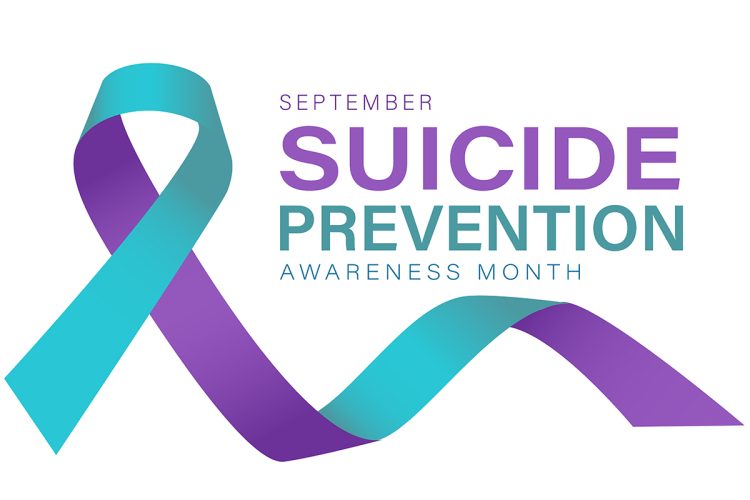
September is globally recognized as Suicide Prevention Month, with September 10th marking World Suicide Prevention Day. For organizations and HR professionals, this presents a timely and critical opportunity to foster open conversations around mental health, reduce stigma, and ensure employees have access to supportive resources. Promoting mental well-being in the workplace is not just a moral responsibility — it is essential for building resilient, compassionate, and productive teams.
Given that we spend a substantial portion of our lives at work, fostering open and meaningful conversations about mental health and suicide prevention in the workplace is not only important but essential.
According to the World Health Organization (WHO), suicide is the third leading cause of death among individuals aged 15 to 29 globally. Alarming statistics indicate that over 700,000 lives are lost to suicide each year worldwide.
In Kenya, stress, burnout, harmful addictions, depression, and financial pressure, if left unaddressed can significantly negatively impact employees’ well-being and may increase the risk of suicidal thoughts and behavior. So, what is the role of employers, HR departments, and the law in creating mentally healthy work environments?
The Legal Foundation
Article 43 (a) of the Constitution of Kenya 2010 states that every person has the right to the highest attainable standard of health, which includes the right to health care services.
Under the Occupational Safety and Health Act (OSHA), 2007, every employer in Kenya has a legal obligation to ensure the safety, health, and welfare of employees—including psychosocial health. Failure to address mental well-being could be interpreted as a breach of this duty.
Additionally, the Employment Act encourages employers to adopt humane treatment, non- discrimination, and fair working conditions—all of which intersect with mental health.
Under Section 3 (b) of the Mental Health (Amendment) Act, 2022 provides that every person has a right to the highest attainable standard of mental health services. The Section also provides that a person with mental illness has the right to appropriate, affordable, accessible physical and mental medical health care; counselling; rehabilitation; and aftercare support.
It is important to highlight that Kenya ratified the UN Convention on the Rights of Persons with Disabilities (CRPD) in 2008. The Convention sets out the government’s obligation to respect, protect and fulfill the rights of persons with disabilities in all aspects of their lives. Under the Convention, persons with mental health conditions are considered as persons with (mental)
disabilities and are accorded human rights protection. By virtue of article 2 (6) of the Constitution of Kenya, the CRPD forms part of the laws of Kenya.
Mental Health: A HR Responsibility?
HR professionals are uniquely positioned to bridge the gap between policy and compassion, placing the ‘Human’ at the heart of Human Resources. In the context of suicide prevention, this means creating safe spaces, listening actively and ensuring employee wellbeing is more than just a policy, it is a daily priority.
Here’s how:
- Policy Inclusion: Mental health should be explicitly addressed in employee wellness policies and guidelines and use of data to track progress and measure the effects.
- Training & Sensitization: Equip employees, supervisors and managers with mental health training and education.
- Employee Assistance Programs (EAPs): Consider partnering with licensed counselors or offering anonymous helplines.
- Flexible Working Options: Reduce burnout by adopting flex-time or hybrid working
- Confidentiality & Non-Retaliation: Ensure employees feel safe to speak up without fear of stigma or penalty.
- Offer incentives to reinforce healthy
In Kenya’s dynamic and often high-pressure work environment, it’s time to recognize that mental health is just as important as performance. As HR professionals, we are uniquely positioned to bring back the ‘H’ in HR—leading with heart, while aligning with policy. Suicide prevention is not just a conversation for counsellors; it’s a responsibility for all of us in the workplace. A supportive, empathetic workforce is a productive one. Let’s commit to creating safe spaces—because in every office, every team, and every organization, every life truly matters. Let’s keep the conversation going because every voice deserves to be heard.
Importantly, if you or someone you know is silently struggling, please don’t walk that journey alone. Reach out to a counsellor — support is available. Many organizations, community groups, and churches in Kenya offer free counselling services. Asking for help is a powerful and brave first step toward healing.
Together, we can build workplaces where compassion, policy, and humanity meet — and where no one feels alone.
About the Author
Gakii M Mugambi |Advocate of the High Court of Kenya | Certified Human Resource Professional.
Sources
- The Constitution of Kenya
- The Employment Act, 2007
- The Occupational Safety and Health Act, 2007
- Mental Health (Amendment) Act, 2022
- UN Convention on the Rights of Persons with Disabilities (CRPD) ratified by Kenya in 2008
- World Health Organization website
- National Guidelines on Workplace Mental Wellness – Ministry of Health, GOK
- An Analysis of the Mental Health (Amendment) Act, 2022 – Kenya National Commission on Human Rights.
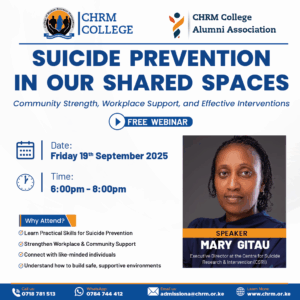
In recognition of the Suicide Prevention Awareness Month, we will be hosting a webinar titled “SUICIDE PREVENTION IN OUR SHARED SPACES: Community Strength, Workplace Support, And Effective Interventions”. See the details below.
Date: Friday 19th September 2025
Time: 6:00pm – 8:00pm
Joining Link: https://shorturl.at/alc6E