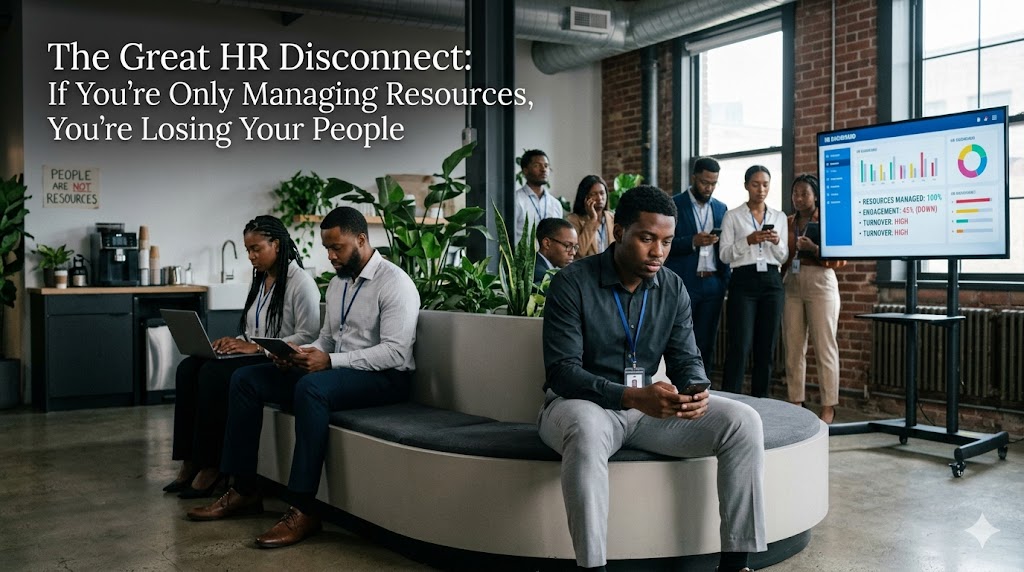
Anthony started his new job at CATCO Limited Group with the kind of first-day energy we all remember. From the outside, the company looked like an absolute powerhouse, the kind of brand name you proudly put at the top of your LinkedIn profile. He had passed the interviews, signed the contract, and showed up on Monday morning ready to make a massive impact.
But the moment he walked through the glass doors? Silence.
Nobody was actually ready for him. His laptop was yet to be procured. His corporate email account hadn’t been provisioned. To make matters worse, his new manager was trapped in back-to-back emergency meetings and could only offer a rushed, “Hey, welcome! Just sit tight for a bit.”
That “bit” turned into two full weeks. Anthony spent his first fortnight at his desk, awkwardly scrolling between TikTok and Instagram, reading outdated PDF manuals, and drinking too much office coffee. As the hours dragged on, one question kept looping in his mind: “Why on earth did they rush to hire me if they didn’t actually have a plan for me?”
Within six months, Anthony was quietly sending out his CV to competitors.
The Cost of the “Transaction” Trap
Anthony’s story isn’t rare. In fact, if you ask around any modern office, you’ll find dozens of people who have lived through some version of the “Two-Week Ghost” onboarding disaster.
It happens because many organizations are still stuck in an old-school way of thinking. They treat recruitment like a mere transaction: A seat is empty, fill the seat, check the box, move on. They focus entirely on the paperwork of hiring rather than the actual human experience of welcoming a living, breathing professional into the business.
When HR operates in a silo, detached from the actual day-to-day realities and future direction of the business, this is exactly where the wheels come off. The company knew they needed a “resource” on the payroll spreadsheet, but they completely forgot they were hiring a person.
From HR to “People”: The Evolution is Non-Negotiable
For decades, human resources were treated like the workplace police or a glorified administrative department. It was all about tracking leave days, filing forms, and issuing warning letters.
But the business landscape has shifted permanently. We are moving rapidly from traditional “Human Resources” to a true focus on People.
What’s the difference? Resources are things you use up, manage with a spreadsheet, and replace when they break down. People are individuals with ambitions, anxieties, skills, and potential.
When an organization fails to make this mental shift, they start treating their workforce as a generic block of assets. They handle human problems with rigid, blanket policies instead of sit-down conversations. If HR misses this evolution, the organization doesn’t just lose cultural points, it loses its best talent, its competitive edge, and ultimately, its revenue.
The Paradox: The More Tech-Savvy We Become, the More Human We Need to Be
There is a huge conversation right now about automation, AI, and digital transformation in the workplace. Many practitioners are worried that technology will make human professionals obsolete.
But the reality is exactly the opposite: The more digital our workplaces become, the more critical our human skills become.
Think about it. A software program or a chatbot can easily handle leave approvals, calculate payroll, or screen thousands-of-words CV for keywords. Technology is great at handling the routine, repetitive data.
But a machine cannot handle a nuanced culture shift. A chatbot cannot sit across from an employee who is burnt out or dealing with a personal crisis and offer genuine empathy. A piece of software cannot look at a fractured team dynamic and rebuild trust.
By letting technology handle the heavy lifting of administration, HR professionals are finally being freed to do what they should have been doing all along: focusing on deep empathy, strategic alignment, and the psychological safety of their teams.
Realigning for the Future: Knowing Where the Business is Going
If HR doesn’t have a clear window into where the business wants to be in the next three to five years, it is impossible to hire effectively today.
Too many companies are still hiring for the past. They look at what the company needed two years ago, write a rigid job description based on old software and outdated frameworks, and then wonder why their new hires feel irrelevant within six months.
We need to start hiring for agility, curiosity, and the ability to learn and unlearn. If the business is planning to expand into digital spaces or new regional markets, HR needs to be ahead of the curve, shaping a culture and a talent pipeline that can sustain that growth before the expansion happens.
The Bottom Line:
If HR misses the strategic direction of the business, the entire organization loses its footing. Anthony didn’t leave CATCO because he hated the work; he left because the organization showed him right from day one that they didn’t know how to value his human potential.
It’s time to stop managing resources and start leading people. Because at the end of the day, a company’s future isn’t built by its systems, it’s built by the humans running them.