There’s a young HR officer in Nairobi who was hired to do the things HR has always done: file leave requests, manage payroll queries, mediate the occasional disagreement between a supervisor and a junior staff member. Eighteen months into the job, her role looks nothing like her job description. She’s now expected to understand data protection law, design hybrid work policies, manage an AI tool that shortlists candidates, and explain to a nervous CEO why “quiet quitting” is trending on LinkedIn. Nobody retrained her. The ground simply moved, and she had to move with it, or be left behind by it.
Her story isn’t unusual. It’s the story of HR itself, everywhere, right now.
HR Has Outgrown Its Old Job Description
For decades, Human Resource Management sat quietly at the edges of the organisation, a department associated with hiring paperwork, disciplinary letters, and the occasional office party. That version of HR is disappearing fast. What has replaced it is a function expected to sit at the strategy table: shaping culture, managing risk, driving performance, and increasingly, deciding how far and how fast technology should be allowed into the employer-employee relationship.
Globally, the shifts are unmistakable. Remote and hybrid work rewired what “workplace” even means. Artificial intelligence now touches recruitment, performance reviews, and even termination decisions, raising ethical questions HR has never had to answer before. Employees, especially younger ones, are asking harder questions about purpose, mental health, and fairness, not just salary. Regulatory environments are tightening around data privacy and workers’ rights. HR professionals today are not administrators of policy; they are architects of how organisations survive change.
The Kenyan Reality Is Its Own Chapter
In Kenya, this shift carries a distinctly local weight. Our labour market is young, fast-growing, and increasingly informal in places where it shouldn’t be, casual contracts, delayed wages, workers dismissed without process or explanation. Naliaka’s mother, the woman who worked a flower farm for eleven years without a written contract only to be let go without warning, is not a rare case. She is a symptom of an HR gap that Kenya still needs to close.
At the same time, Kenyan workplaces are modernising at real speed. Gig work platforms, fintech-driven payroll, remote teams serving international clients from Nairobi, all of it demands HR practitioners who understand both the letter of Kenyan labour law and the pace of global best practice. The organisations that will thrive in the next decade are the ones whose HR teams can do both at once: protect workers the way Naliaka’s mother should have been protected, while building systems agile enough to compete globally.
Where CHRM Comes In
This is precisely the space CHRM exists to fill.
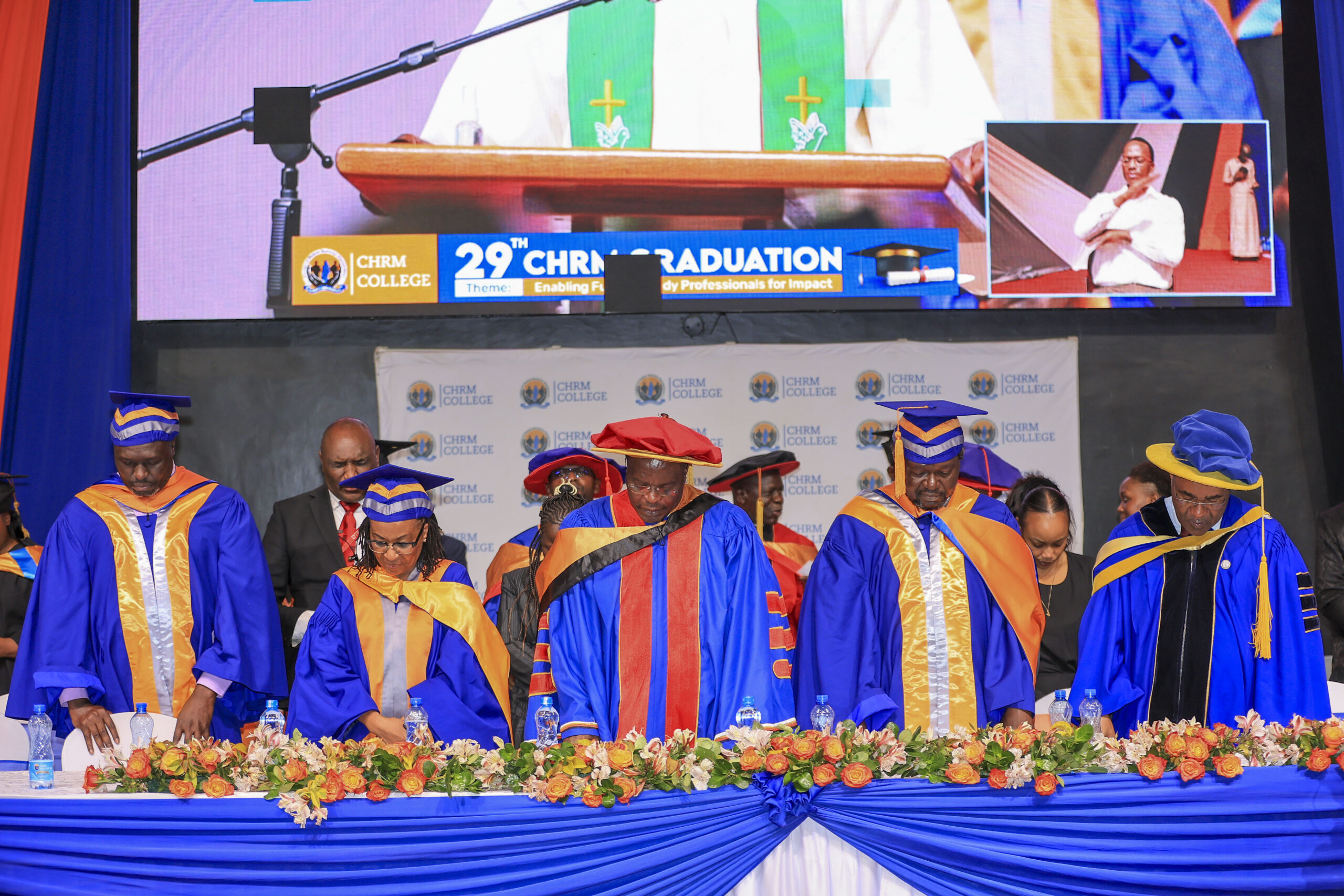
CHRM was never built to produce HR generalists who can only recite theory. It was built to produce practitioners who understand the mechanics of Kenyan labour law as thoroughly as they understand the direction global HR is heading, people who can walk into a flower farm in Naivasha or a fintech office in Nairobi’s CBD and know exactly what fair, effective, forward-looking HR looks like in either setting.
That dual fluency, deeply local and genuinely global, is CHRM’s real advantage. It’s what allows CHRM graduates to sit in a boardroom and speak the language of workforce analytics and AI-assisted talent management, while never losing sight of the worker whose leave days were never honoured, or whose contract never existed on paper.
Leveraging that position means CHRM has a responsibility that goes beyond the classroom: to keep curricula current with how fast HR is changing, to keep pushing its graduates into the rooms where policy and strategy are decided, and to keep insisting, loudly, that good HR is not a cost center, it is the difference between organisations that retain talent and organisations that quietly bleed it.
A Function Worth Investing In
The HR officer in Nairobi, the one whose job outgrew her job description, didn’t fail. She adapted, the way HR itself must keep adapting. The organisations, and the countries, that take that seriously, that invest in practitioners who can hold both the Kenyan context and the global conversation in the same hand, are the ones that will build workplaces worth showing up to.
That is the work CHRM has chosen. Not to teach HR as it was, but to shape the people who will decide what it becomes next, here in Kenya, and wherever Kenyan-trained HR talent is needed in the world.